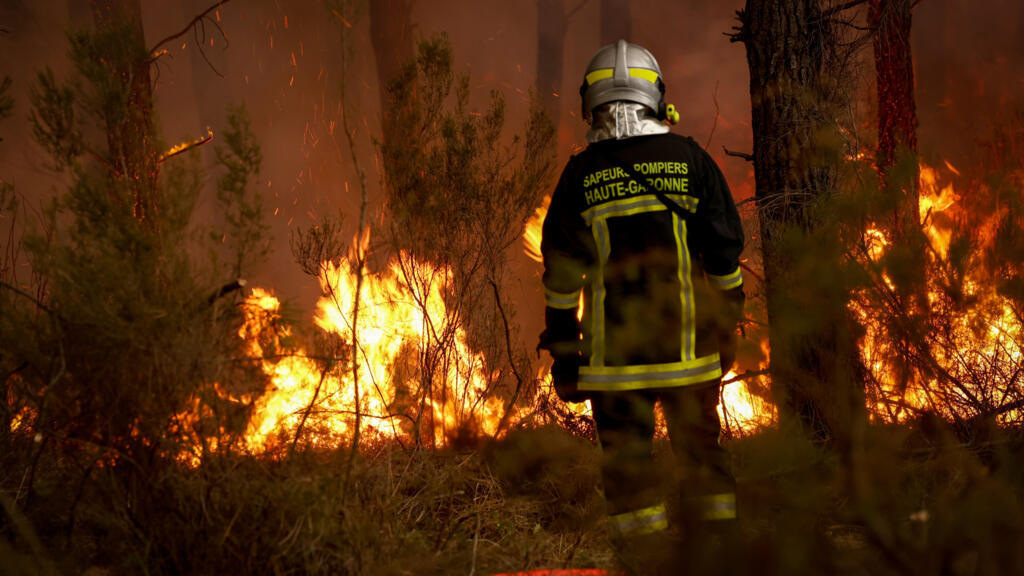
France and Spain are facing one of Europe’s largest wildfire emergencies in decades, with more than 300,000 people displaced, vast stretches of forest and farmland burned, and firefighters racing against wind, heat, and drought before another surge in temperatures hits western Europe.
The fires have swept through southwest France, central Spain, eastern Spain, and several Mediterranean zones after a punishing sequence of heatwaves left vegetation dry enough to burn fast and violently. The worst French blaze has torn through Gironde, near Bordeaux, forcing mass evacuations and turning a major wine and tourism region into an emergency zone. In Spain, fires near Madrid, Ávila, Castellón, Toledo, and València have forced tens of thousands from their homes and placed villages, farms, and transport routes under threat.
The disaster follows Europe’s deadly June heatwave, which pushed heat from a weather hazard into a public-health crisis. Now the same hot, dry pattern is showing its other face: landscapes that ignite faster, fires that create their own weather, and evacuation orders that stretch across national borders.
What Is Happening In France And Spain
The largest French emergency is in Gironde, where authorities have evacuated around 220,000 people in one region alone. The fire has burned roughly 42,000 hectares, an area about four times the size of Paris, and has moved close enough to Bordeaux that officials have been building firebreaks to protect the metropolitan area.
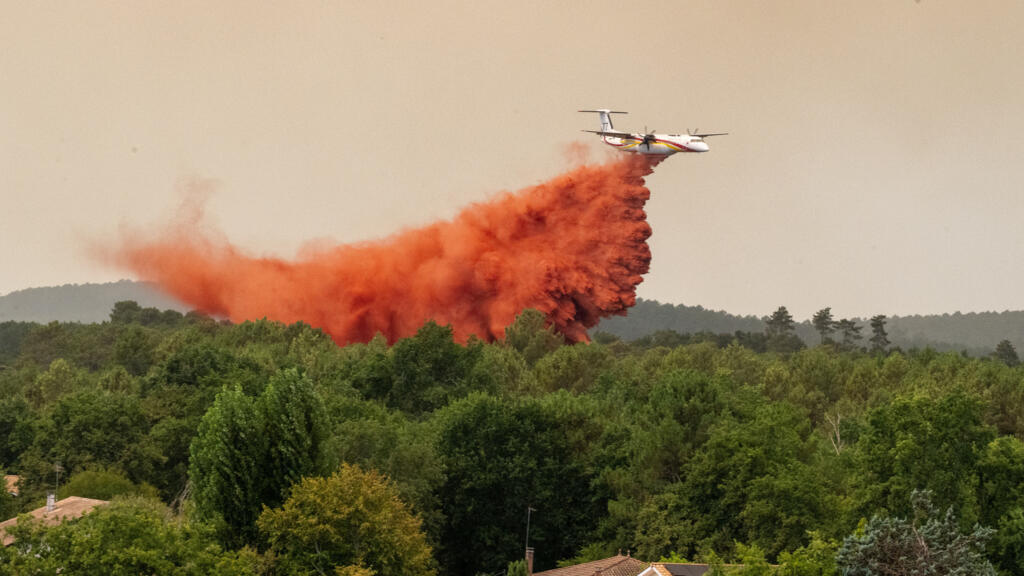
France has deployed thousands of firefighters, police, soldiers, civil security volunteers, aircraft, and heavy machinery. The operation has focused on clearing vegetation, defending towns, protecting roads, moving tourists and residents out of danger, and keeping flames from advancing into denser population zones.
Spain is fighting multiple fires at the same time. Major blazes have burned near Madrid, in Ávila, in Castellón, near Toledo, and around València. Spain’s environment ministry reported 32 major fires so far in 2026, affecting more than 150,000 hectares by late July. The Ávila fire alone has burned around 50,000 hectares, making it one of Spain’s largest recent wildfires.
| Country | Main Areas Affected | Reported Impact |
|---|---|---|
| France | Gironde, Landes, Var, Hautes-Alpes, Corsica | More than 250,000 evacuated nationally, with about 220,000 in Gironde |
| Spain | Madrid region, Ávila, Castellón, Toledo, València | Around 79,000 evacuated, with tens of thousands more confined |
| Combined France And Spain | Western and southern Europe | More than 300,000 people displaced or under emergency movement orders |
| Burned Area | France and Spain combined | More than 300,000 hectares estimated by European wildfire monitoring |
| EU Response | France and Spain | Aircraft, helicopters, and teams sent through the EU Civil Protection Mechanism |
The numbers are still moving. Fire seasons are measured in days, wind shifts, fuel moisture, road closures, and flare-ups. A fire can seem stable at night, then turn dangerous again when dry wind rises.
Why These Fires Became So Dangerous
The fires did not grow in normal summer conditions. Europe entered late July after repeated heatwaves, low rainfall, and record-breaking June temperatures. Dry vegetation became fuel. Pines, scrub, grasses, vineyards, hedgerows, and forest edges all dried under sustained heat.
A fire needs ignition, fuel, and weather. France and Spain now have an abundance of the last two. Ignition can come from lightning, electrical faults, machinery, cigarettes, barbecues, arson, farm activity, or vehicle sparks. Once a fire starts in dry vegetation, wind and heat decide how quickly it escapes control.
The European Forest Fire Information System, the EU-backed platform for European wildfire tracking, estimates burned area and fire activity across the continent using satellite and national data. Its late-July figures show France and Spain running far above normal seasonal stress, with both countries facing fire behavior that strains local response capacity.
The deeper problem is that heat is no longer arriving as isolated weather. It is arriving through repeated waves that dry soils, lower humidity, weaken forests, and leave fire crews facing larger fronts earlier in the season.
Gironde Has Become France’s Fire Epicenter
Gironde’s fire has captured Europe’s attention because of its size, speed, and proximity to Bordeaux. The blaze has burned forest and rural land west and southwest of the city, forcing evacuations from multiple municipalities and disrupting tourism during the approach to August, one of France’s busiest travel periods.
Bordeaux Mayor Thomas Cazenave said the fire was near the metropolitan area, with officials preparing protective measures rather than ordering a full city evacuation. Regional prefect Sophie Brocas warned tourists not to travel to Gironde until the fire is contained, a rare message for a region that depends heavily on summer visitors.
French Interior Minister Laurent Nuñez described the Gironde fire as highly volatile after difficult overnight conditions. Reports from firefighters described erratic fire behavior, including fire-generated clouds that can create their own wind and push flames in sudden new directions.
That kind of fire behavior changes the logic of response. Firefighters cannot simply draw a line and assume flames will move predictably. Hot air, smoke columns, wind shifts, slope, and fuel can produce sudden surges that threaten roads, shelters, and evacuation routes.
Gironde is no longer only a local disaster. It has become a warning about how fast western Europe’s forest-fire risk is changing.
Spain’s Fires Are Spreading Across Multiple Fronts
Spain’s crisis has a different shape. Instead of one dominant fire, the country is dealing with several major outbreaks across varied terrain. Fires west of Madrid forced evacuations from towns and villages. A large fire in Ávila burned around 50,000 hectares. New fires near València and Castellón strained emergency crews along the Mediterranean side of the country.
Prime Minister Pedro Sánchez warned that Spain and the Iberian Peninsula are feeling the direct effects of the climate crisis, naming fires, storms, and heavy snow among the changing extremes hitting the region. The remark came from a firefighting command post west of Madrid, where crews were trying to stabilize major fire fronts.
Spain’s emergency services have described some fires as beyond ordinary suppression capacity during peak conditions. That does not mean crews abandon them. It means they may shift from direct attack to protecting towns, cutting fuel lines, using aircraft when safe, and waiting for wind or humidity to improve.
The València region has faced added concern after a man died in Manises during the fires. Around the country, evacuations have affected residents, tourists, farmers, care facilities, and entire villages near smoke and flames.
The EU Is Treating The Fires As A Shared Emergency
France and Spain have requested help beyond national resources. The European Commission said the fires have triggered one of Europe’s largest evacuation operations and activated the EU firefighting response through the EU Civil Protection Mechanism.
The EU has sent seven planes and four helicopters to France from Czechia, Croatia, Germany, Portugal, Slovakia, Sweden, and Türkiye. Spain has received additional aircraft from Greece, Italy, and Türkiye. European Commissioner for Crisis Management Hadja Lahbib said no country should face a disaster of this scale alone.
That message matters. Wildfires are becoming cross-border emergencies even when flames stay inside one country. Smoke can travel. Aircraft are shared. Fire crews rotate across borders. Satellite systems monitor multiple countries at once. Tourist movement turns local evacuation decisions into regional transport problems.
| Response Need | Why It Matters |
| Aircraft And Helicopters | Drop water or retardant when terrain and wind allow safe flights |
| Firebreaks | Remove fuel before flames reach towns or roads |
| Evacuations | Move residents before smoke and flames block escape routes |
| Shelter Capacity | Houses tourists, older adults, care-home residents, and displaced families |
| Air Quality Support | Protects people from smoke, fine particles, and toxic fumes |
| Post-Fire Inspection | Checks homes, power lines, roads, water systems, and unstable slopes |
Europe’s fire response is now a shared system, not a set of separate national efforts.
Smoke Is A Public-Health Threat
Wildfire smoke can travel far from flames. It carries fine particles, gases, ash, and chemical residues from burned vegetation, buildings, vehicles, plastics, and farm materials. For healthy adults, smoke can cause coughing, eye irritation, sore throat, headaches, and shortness of breath. For people with asthma, heart disease, COPD, pregnancy, older age, or childhood vulnerability, it can become far more serious.
French regions have distributed masks and issued air-quality advice as smoke spread from the fires. Shelters must now manage heat, crowding, smoke exposure, medication needs, stress, pets, and mobility limits all at once.
Firefighter exposure is another major health concern. Fire crews face smoke, heat stress, burns, falling trees, unstable structures, long shifts, dehydration, and fatigue. In Gironde, dozens of firefighters were injured during the response, with some needing evacuation.
The health damage from a wildfire does not end at containment. People return to ash, damaged homes, contaminated debris, water concerns, insurance stress, and grief. Farmers may lose livestock, fences, soil cover, irrigation systems, barns, and equipment. Forest ecosystems may take years to recover, and repeated fires can change what regrows.
Why Climate Change Is Making Fire Seasons Harder
Wildfires have always been part of Mediterranean and Atlantic Europe. The shift is in timing, intensity, scale, and the conditions that surround them. Hotter air draws more moisture from vegetation and soil. Longer dry periods leave forests ready to burn. Heatwaves raise the chance that small fires become major emergencies.
The June heatwave created a dangerous prelude. Western Europe recorded historic warmth, and France saw extreme temperatures before peak wildfire season even arrived. By late July, the landscape was primed for combustion.
Climate change does not light every fire. Human actions still start many of them. What climate change does is load the landscape with drier fuel and raise the odds that an ignition grows into a firestorm. That means prevention must address both human behavior and the altered climate background.
Banning barbecues, closing forests, arresting reckless visitors, and monitoring power lines can reduce ignitions. Long-term adaptation requires more: fuel management, safer building zones, forest thinning where appropriate, prescribed burning under safe conditions, drought-aware land planning, stronger emergency alerts, and better support for rural fire brigades.
What Residents And Travelers Should Know
Authorities in affected areas are urging people to obey evacuation orders, avoid closed forests, stay out of smoke when possible, and delay nonessential travel to active fire zones. Tourists should not assume a reservation makes an area safe. If a prefecture, municipality, or regional emergency service tells people to leave or stay away, that guidance overrides travel plans.
Residents should prepare medications, documents, chargers, water, pet supplies, and basic clothing before evacuation orders arrive. Cars should face outward when parked in high-risk zones. Windows and vents should be closed when smoke rises. People with respiratory disease should monitor symptoms and seek care if breathing worsens.
After a fire passes, return should wait for official clearance. Burned roads, downed wires, damaged gas lines, weakened trees, unstable walls, and ash can create hazards long after flames disappear.
The Fire Season Is Not Over
The most troubling fact is timing. Europe is still moving toward the traditional peak of summer fire danger. More heat is forecast, and drought conditions can last long after one fire front calms. France, Spain, Portugal, Italy, Greece, and the wider Mediterranean still face weeks of risk.
The fires sweeping France and Spain show how disaster now unfolds in layers: heat deaths, drought, ignition, mass evacuation, smoke exposure, tourism disruption, firefighter injuries, farmland loss, and long recovery. Each layer puts pressure on public systems built for smaller events.
These fires are not a distant climate warning. They are the current cost of hotter summers, drier landscapes, and crowded regions at the edge of burnable land. France and Spain are fighting flames today, but all of Europe is being forced to rethink what wildfire readiness means in a warming climate.