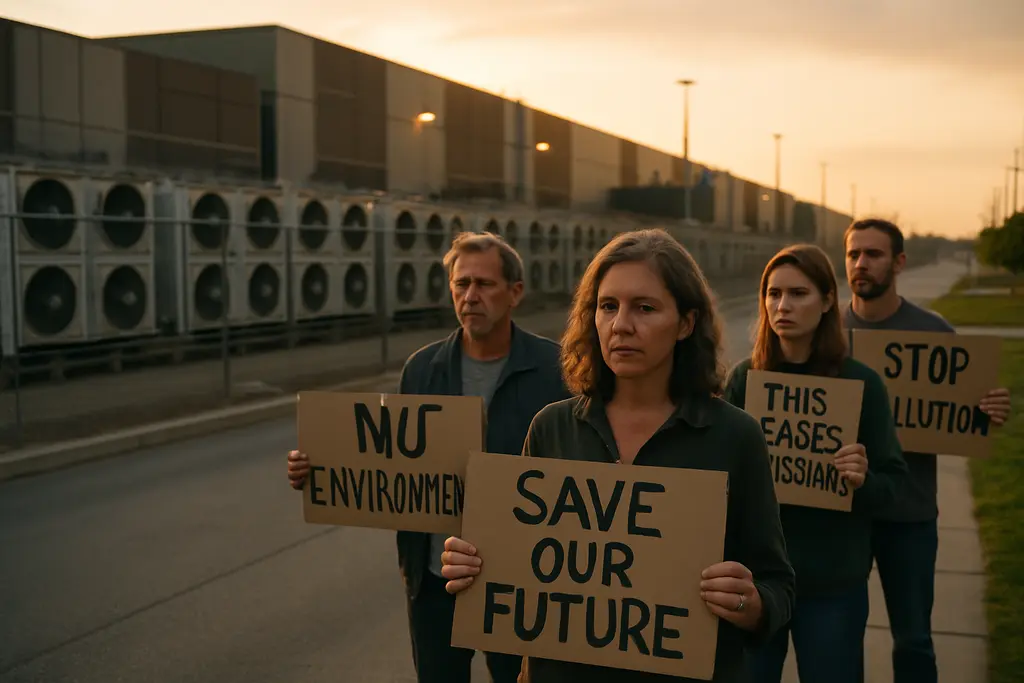
Data Center Permits have become a public-policy flashpoint after the Environmental Protection Agency proposed changes that could reduce federal notice and hearing requirements for some Clean Air Act minor-source air permits. The proposal, released on July 7, 2026, drew opposition from nearly 200 environmental, health, and community groups, as well as California, Massachusetts, Michigan, and 11 other states, according to Chemical & Engineering News.
The comment deadline passed on August 21, 2026. As of September 14, 2026, the research record provided for this report does not confirm a final EPA rule. That distinction matters: the proposal has generated strong reactions, but the changes described here remained proposed rather than enacted in the available record.
Data Center Permits And The EPA Proposal
Why Data Center Permits Became A Flashpoint
Data centers can need air permits when backup generators or related equipment emit regulated pollutants. The current debate centers on minor-source permits under the Clean Air Act, a category that can cover facilities whose emissions fall below major-source thresholds. Opponents argue that these permits still matter to nearby residents because they can involve diesel generators, local air impacts, and cumulative concerns in areas already hosting industrial activity.
The EPA proposal drew scrutiny because it would let states remove federal public notice and hearing requirements for those minor-source permits. Critics say a 30-day comment period and public hearing process may be the only practical way some residents learn about a project before key decisions are made. Supporters of permitting changes argue that federal procedures can delay industrial development and create uncertainty for projects tied to artificial intelligence infrastructure, cloud computing, and energy-intensive digital services.
What The Comment Record Shows
The scale of opposition was notable. Nearly 200 groups filed comments against the proposal, along with 14 states. Their shared concern was not only the pollution profile of individual projects, but the loss of a uniform federal floor for public participation. In their view, giving state and local agencies more discretion over notice could produce uneven access to information depending on where a project is located.
That concern is especially sharp in fast-growing data center markets. In Georgia, local organizers have argued that residents do not routinely search agency databases for air permit filings. Public notices, they say, often serve as the trigger for community awareness. Related EarthTimes reporting on Georgia data center permit pushback tracked similar concerns over transparency and local review.
Community Objections Focus On Public Notice
Health, Equity And Local Awareness
Community reactions have focused less on a single facility and more on process. The strongest objections are that public notice, comment windows, and hearings give residents a way to raise health, environmental justice, and siting concerns before permits are approved. Groups opposing the EPA proposal warn that removing federal requirements could make it harder for residents to know when emissions-related decisions are being made.
Environmental advocates at a July 22, 2026 hearing in Georgia described the proposal as “alarming” and “anti-democratic,” according to the research provided for this report. Those characterizations are advocacy positions, not findings by a court or agency. They do, however, reflect a broader concern: public participation rules are being treated by opponents as a safeguard, not a procedural extra.
Civil-rights groups have also raised concerns. The NAACP filed comments on August 20, 2026 warning that weaker oversight could allow biased or poorly monitored permitting outcomes for data centers and similar facilities. That claim remains part of the public comment dispute; the available research does not show that EPA has issued a final determination accepting or rejecting it.
Legal Access And Court Challenges
Opponents, including groups identified in the research as Sierra Club and Public Citizen, have warned that removing federal public participation requirements could affect communities’ ability to challenge permits. Their concern is practical: if residents learn about a permit late, they may have less time to collect technical information, retain experts, organize public comments, or preserve issues for later review.
Legal risk also cuts the other way. If EPA finalizes the proposal, lawsuits may test whether the agency has stayed within the Clean Air Act and administrative procedure requirements. The research record does not confirm that such litigation has been filed over a final rule, because no final rule is confirmed in the materials available for this report. At this stage, the dispute remains centered on proposed agency action and public comments already submitted.
Industry Response Centers On Speed
Developers Want Shorter Reviews
Industry reaction has emphasized speed and predictability. The Data Center Coalition, a trade group representing major data-center developers, has supported the federal push to streamline permitting, while not answering detailed questions about eliminating public notice or comment requirements, according to Axios. That leaves a gap between general industry support for faster review and the specific public-participation concerns raised by opponents.
Supporters of changes to Data Center Permits argue that New Source Review procedures can be time-consuming, especially as demand rises for AI-related computing infrastructure. Their position is that delays in permitting can slow projects that companies and some policymakers view as economically significant. The research also identifies a related May 11, 2026 EPA proposal that would allow construction of non-emitting elements, such as wiring, piping, and concrete pads, before a full air-emissions permit is obtained. Polluting components, such as generators, would still require a permit before installation under that description.
What Industry Has Not Fully Answered
The record described in the available research leaves several questions unresolved. Industry groups have expressed support for faster permitting, but the public materials cited here do not show detailed industry answers on whether a 30-day public comment period should remain a federal requirement for minor-source permits. That absence is central to the public debate.
- Opponents say notice and hearings help residents identify local health and air-quality concerns before approval.
- Supporters say permitting delays and rigid procedures can slow industrial and digital infrastructure projects.
- The unresolved policy question is whether speed can be increased without reducing public access to permit information.
Legal And Policy Stakes After The Deadline

The Comment Period Has Closed
The August 21, 2026 comment deadline changed the procedural posture of the debate. Communities, states, industry groups, and civil-rights organizations had their formal opportunity to submit comments. EPA’s next step, based on ordinary rulemaking practice, would be to review comments before deciding whether to revise, withdraw, or finalize the proposal. The research provided for this report does not confirm which path EPA had chosen as of September 14, 2026.
Polling cited in the research showed public unease with local data center growth. A mid-August 2026 survey of 2,045 registered voters by Heatmap Pro and Embold Research found that 75% opposed building data centers near their own communities, while 45% said they would strongly oppose nearby construction. Poll results are not permitting decisions, but they help explain why public notice has become politically sensitive.
Federal Floor Or State Discretion
The core policy issue is whether federal rules should continue to require a baseline level of public participation for minor-source permits, or whether state and local agencies should have wider discretion. A state-led approach could allow permit systems to move faster in some places. It could also create different levels of public access across states, which is the risk highlighted by opponents.
That tradeoff is not unique to data centers, but these facilities have made it more visible. Data centers are tied to economic development, energy demand, land use, water use, and air emissions from backup power systems. A permitting change aimed at administrative speed can therefore become a wider argument about who gets notice, who gets heard, and when communities can respond.
Data Center Permits And Public Trust
The reactions to the EPA proposal show a clear divide, but not a simple one. Community groups and several states see the proposal as a threat to transparency and local participation. Industry voices see permitting delay as a barrier to building needed digital infrastructure. EPA’s final decision, if issued, will determine whether the federal public-notice floor remains in place for the permits at issue.
For now, Data Center Permits sit at the intersection of air regulation, community trust, and industrial growth. The strongest supported finding is that opposition has been broad and organized, while industry support has centered on streamlining rather than detailed public answers on notice requirements. Further insights and updates on related federal policies can be explored at The US Report, a related site in the same network.
The question left by the comment record is specific: whether faster permitting can be paired with enough public notice for residents to understand and challenge projects that may affect local air quality. Until EPA confirms a final action, the public reaction remains a warning signal rather than a settled regulatory outcome.