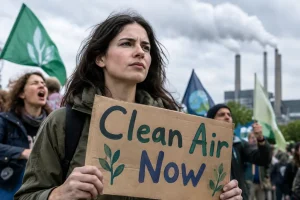
Georgia Data Centers could face a quieter air-permitting process if a U.S. Environmental Protection Agency proposal moves from draft to final rule. The change, proposed in July 2026, would eliminate federal requirements for public notice and comment on air-pollution permits for minor sources, including diesel generators used by data centers, according to Axios reporting.
The proposal is not yet final. That distinction matters because current permitting practices in Georgia have not been automatically erased. The public comment period for the federal proposal ends on August 21, 2026, after which EPA would still need to decide whether and how to finalize the rule.
The dispute is less about whether data centers need backup power and more about who gets to see, question, and respond to air-permit decisions before they are approved. For communities near proposed facilities, public notice can be the first formal sign that diesel generators or other permitted equipment may be added nearby. For agencies and developers, public-notice procedures can add time and paperwork to projects that may already be moving quickly.
Why Georgia Data Centers Are A Permit Test
Rapid Growth Meets A Narrow Permit Category
Georgia has become a useful test case because the number of minor-source permits tied to data center diesel generators has risen sharply. Since January 2025, 20 minor-source permits for diesel generators at data centers have been approved in Georgia, compared with 17 between 2014 and 2024, Axios reported. That comparison does not, by itself, prove higher pollution exposure at any specific site. It does show that permitting for backup power has become a more frequent public-policy issue in the state.
Minor-source status is central to the proposed rule. A minor source is not treated the same as a major source under the Clean Air Act permitting structure. The research provided for this article identifies diesel generators used by data centers as examples of equipment that can fall into the minor-source category. The EPA proposal would affect the public-participation requirements attached to that category, not create a blanket exemption from all air-permitting duties.
Georgia Data Centers And Minor Sources
For Georgia Data Centers, the practical question is whether a permit for backup generators would still receive public notice before approval. Under the proposal as described, EPA would remove federal requirements for notice and comment for minor-source air permits. State and local authorities would then have greater discretion over public participation requirements.
That shift could matter even if emissions limits, technical reviews, and permit conditions remain in place. Public notice is not only a legal step; it is also an information channel. Residents, local officials, and advocacy groups use it to identify proposed pollution sources, ask for documents, submit technical objections, and request changes. Without that step at the federal level, some permits could move with less public visibility unless Georgia preserves its own procedures.
What The EPA Proposal Would Change
Confirmed Elements Of The Proposal
The confirmed change under discussion is procedural. EPA has proposed eliminating federal public notice and comment requirements for air-pollution permits issued to minor sources. EPA’s stated justification, as reported by Axios, is that the change would reduce administrative burdens and allow state and local authorities to decide how public participation should work.
That justification reflects a long-running tension in environmental administration. Agencies must process permits, developers seek predictable timelines, and communities seek enough time and information to understand nearby sources. The proposal would move some of that balance away from a federal baseline and toward state-level choices.
Georgia’s air-permitting system is not run by EPA alone. The Georgia Department of Natural Resources, working with EPA Region 4, is responsible for Clean Air Act permitting in the state, according to the EPA Georgia permitting page. That structure means Georgia’s own procedures will be central if the federal rule is finalized.
What Remains Unresolved
Several points remain unresolved. EPA has not finalized the rule based on the research provided. Georgia has not been shown to have changed its current public-notification practices. The proposal also does not establish, on the facts available here, that every data center generator permit would avoid public review in practice. The outcome depends on final federal language, state implementation, and whether Georgia retains notice procedures even if federal rules no longer require them.
Axios reported that Georgia may keep its current public-notification practices, but any changes would require public review and EPA approval. That means the federal proposal could reduce the national floor for public participation while still leaving room for Georgia to maintain more public process than the revised federal rule would require.
Community Oversight And Pollution Risk

Why Public Notice Matters
The main concern raised by environmental advocates is that permits could be approved without public knowledge. That concern is procedural, but it has environmental significance. A permit file can contain assumptions about equipment, operating limits, site location, and compliance duties. Public review gives outside parties a chance to question those assumptions before an approval becomes final.
For residents, the concern is not abstract. Data centers often rely on diesel generators for backup power. The research provided does not quantify emissions from the approved Georgia permits, so any claim about local pollution levels would go beyond the available record. What can be said is narrower: the permits concern air-pollution sources, and reducing public notice could limit the ability of communities to examine those sources before approval.
The rule could affect Georgia Data Centers at a time when public awareness of power use, backup generation, and local infrastructure pressure is increasing. Still, the permitting question should not be overstated. A procedural rollback would not necessarily mean every permit is unlawful, every facility is unsafe, or every community will lose notice. It would mean fewer federal guarantees of public participation for a defined category of permits.
Efficiency Versus Public Scrutiny
EPA’s administrative-burden argument is not unusual in permitting policy. Agencies often face pressure to process applications faster, especially when infrastructure and industrial projects are expanding. Shorter procedures can reduce delay for applicants and staff. The tradeoff is that the public may have fewer chances to identify site-specific concerns before decisions are made.
That tradeoff is especially visible for minor-source permits because the label can sound low-risk to the public. Minor-source status is a regulatory category, not a public-health assurance for every neighborhood. The available research does not show that the Georgia permits exceed legal limits. It also does not show that public review is unnecessary. Those are separate questions, and the EPA proposal addresses the process for public involvement rather than the full technical basis for each permit.
What The EPA Permit Shift Means In Georgia
The Next Step Is The Comment Deadline
The next formal step identified in the research is the close of public comment on August 21, 2026. Until then, members of the public, state agencies, local governments, companies, and advocacy groups may respond to the proposal. After that, EPA would need to consider comments and decide whether to finalize, revise, or withdraw the change.
For Georgia regulators, the issue is whether current notice practices remain in place if the federal floor changes. For developers, the issue is whether minor-source air permits become faster or less exposed to public challenge. For nearby residents, the issue is whether they will still receive early notice of proposed generators and related air permits.
The immediate question for Georgia Data Centers is therefore not whether EPA has ended public oversight. It has not, based on the available record. The question is whether a proposed federal rollback will shift more responsibility to Georgia and reduce the guaranteed opportunities for public review of minor-source air-pollution permits.