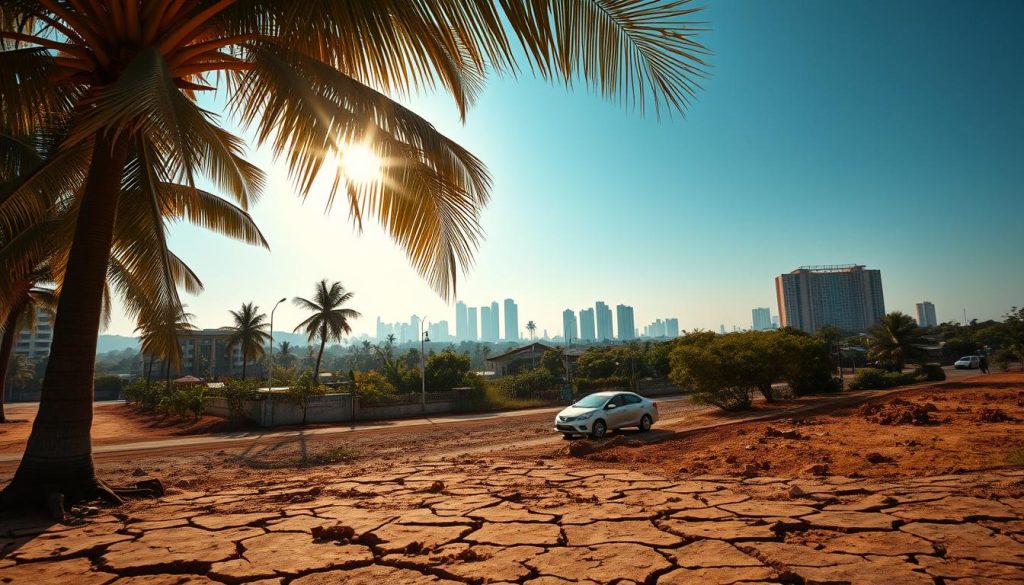
When did springtime weather reports start sounding like apocalypse bingo? This year, Southeast Asia’s thermometers are pulling a Game of Thrones twist: winter never came, but summer arrived with a vengeance. Manila’s “feels-like” 51°C afternoons now rival sauna competitions, while Yangon’s earthquake survivors swap rubble for concrete ovens. La Niña—climate’s most unreliable narrator—promised gentle rains. Instead, we got thermal whiplash.
Jakarta’s early 2025 heat patterns (courtesy of Climate Central) read like a Black Mirror script. Myanmar’s double disaster—44°C temps alongside seismic shocks—makes surviving earthquakes feel like auditioning for a dystopian cooking show. Human-caused climate change isn’t just turning up the dial—it’s smashing the thermostat with a sledgehammer.
Here’s the burning question: When did “spring” become code for “preheating the planet”? We’re not just breaking records anymore—we’re rewriting seasonal definitions. From Manila’s sidewalk egg-frying experiments to Bangkok’s midnight heat advisories, this isn’t weather. It’s a preview.
Weather, Sports, and the Impact of Early Warmth
Imagine athletes collapsing in the middle of a game, like extras in a disaster movie. Fans are swapping sunscreen for emergency ice packs. This isn’t just fiction—it’s sports event disruption in the face of extreme weather. Games are being rewritten by an opponent we never trained for.
Last month, Muay Thai fighters in Thailand faced 115°F heat indexes. It was actual danger, not just a metaphor. Schools in the Philippines canceled outdoor activities quickly. Cricket leagues now plan matches like meteorologists, and fishermen-turned-referees share stories of disappearing catches.
Stadiums are turning into saunas, and tournaments are becoming survival challenges. Sports traditions are adapting fast: nighttime games, hydration breaks, and leagues moving like climate refugees. The planet is changing the rules faster than we can say “timeout!”
This isn’t just about sweatier jerseys or rescheduled matches. It’s about cultural touchstones unraveling. A basketball hoop rusts beside empty nets, and fishing boats are docked where championships once roared. When the air itself becomes a rival, how do we keep the game alive?
Adapting Sporting Events and Venues to New Realities
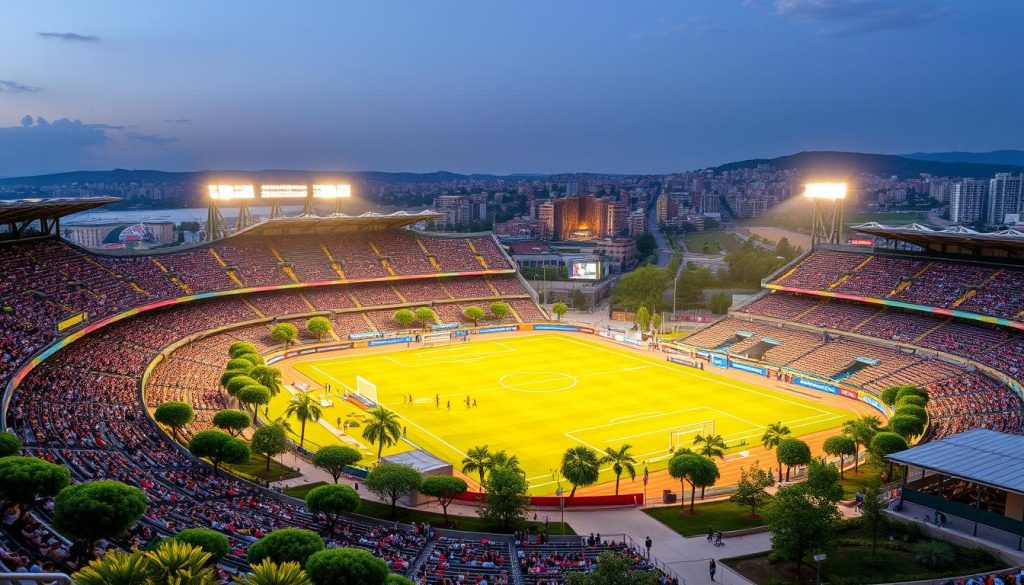
When did watching a football game become like surviving a Roman colosseum event? Stadiums around the world are now using heat-resistant materials that would impress Caesar’s engineers. Ahmedabad’s Heat Action Plan turns concrete areas into cool spots with temperature alerts.
Bangkok’s stadiums have green roofs that are also urban farms. It’s like combining a soccer field with a chia pet. Singapore’s misting systems make watching games feel like a car wash, showing that comfort is more important than tradition.
But these changes aren’t just nice to have. As we’ve seen, climate changes are making sports different. Athletes face conditions where pushing too hard could harm their kidneys. Vietnam’s dragon boat races now happen in different seasons, not just for fun.
What does the future hold? Imagine Wimbledon’s retractable roof with Mad Max style. Venues are now like climate-controlled lifeboats in our weather dystopia. The big question is: will fans even know their favorite sports when every game is a survival test?
Disaster Preparedness and Public Health
Imagine surviving a 6.8 magnitude earthquake and then facing 44°C heatwaves. This is like nature’s worst season finale. Myanmar’s recent disaster is like deleted scenes from The Walking Dead, but real.
Last year, Asia saw 79 hydro-meteorological disasters. This shows we need to rewrite our emergency plans. Yangon’s refugee camps face infrastructure damage, heat, and waterborne diseases. It’s a huge test for public health systems, and they’re not doing well.
Disaster response is now like improv theater. How do you handle a field hospital that’s too hot? What’s the plan when floods and heatwaves chase each other? The WMO’s numbers show we’re all part of a big movie, but we don’t have the script.
This isn’t disaster preparedness. It’s like using duct tape to hold things together. As temperatures rise, our emergency plans need to be stronger than a Marvel superhero. The real question is, will our response be a documentary or a dystopian story?
Policy, Public Awareness, and Regional Stories
Governments are trying to control weather trends but it’s like playing 4D chess with burning pieces. Pakistan has a National Climate Finance Strategy that looks like an IKEA manual during an earthquake. The Lowy Institute has criticized regional cooperation efforts, saying it’s more like “Hunger Games” than “Avengers assemble.”
In Manila, TikTok heatwave alerts are all the rage, adding a fun twist to crisis management. Jakarta’s fossil fuel deals are falling apart like a house of cards in a storm. Policy successes and failures should have their own Yelp category. “One-star review: Would not recommend apocalypse prevention package.”
Public engagement strategies are changing as fast as weather patterns. When governments use TikTok for disaster alerts, policy-making becomes a mix of drama and comedy. The big question is: Can governments keep up with the fast-changing weather?
The answer is a mix of Pakistan’s strategic moves and the Lowy Institute’s reality checks. It’s not about perfect plans but who remembers to bring a fire extinguisher to meetings.
Resilient Communities in Sport and Society
What do solar-powered street carts and tide-tracking apps have in common? They show that creativity blooms when we need it most. In Bangkok, vendors turned scraps into climate-proof food stalls. It’s like a street version of Shark Tank, but with more fish sauce.
Philippine fisherfolk also found new ways to predict the weather. They use apps instead of old tide charts. This isn’t just adapting; it’s survival hacking at its best.
Resilience isn’t about fancy tech or UN grants. It’s about grandmothers teaching kids to read flood gauges. Farmers in Nepal and Bangladesh show this determination crosses borders. When your home is a battle zone, you innovate to survive.
So, when someone says these solutions are “low-tech,” correct them. The best tools are often made with duct tape and willpower. Imagine MacGyver’s Southeast Asian cousin working on mangrove projects during the monsoon.
Global Lessons from Southeast Asia’s Climate Adaptation Journey
Southeast Asia is leading the way in climate science. Malaysia’s buildings are designed to beat the heat, unlike Dubai’s energy-hungry towers. Vietnam’s AI predicts storms better than Silicon Valley’s tech.
These aren’t just small fixes. They’re big plans for a world facing IPCC reports of severe climate disasters.
In Ahmedabad, the Heat Action Plan shows cities can beat the heat. Workers in Kuala Lumpur to Karachi use tech to stay safe during heatwaves. Rice farmers in Kedah mix old wisdom with new tech, like climate sommeliers.
What makes these solutions work? They see climate science as a living guide, not just theory. The Asian Development Bank shows that regions facing heatwaves act fast, not waiting for perfect data.
They turn cities into testing grounds for new ideas. Failed plans are quickly improved, like app updates.
The key is to redefine resilience. It’s not just about building walls. It’s about making systems where everyone plays a part, like fishermen and soccer stadiums.
Southeast Asia’s approach is not about winning. It’s about staying in the game and changing the rules.