Imagine a boardroom where decisions are made by sneezes, not spreadsheets. That’s how African wild dog packs make decisions, according to Botswana researchers. They discovered that these dogs use sneezes to vote on hunting plans.
This voting system is quite unique. It shows how these dogs work together in their packs. Their social structures are complex and fascinating.
These dogs challenge our ideas about animal intelligence. Their societies are like fur-covered think tanks. Every member’s survival depends on sharp cooperation.
Have you ever seen a workplace use a “sneeze quorum” before lunch? The Botswana study shows that wild dog hunting needs consensus-building like Capitol Hill. Their sneeze debates reveal a truth: nature’s survival strategies often outsmart human plans.
Exploring their social mechanics will reveal interesting insights. Who knew political science textbooks needed chapters on Lycaon pictus diplomacy? The real question is, what do their strategies say about our own systems?
The Discovery: Sneezing as a Pre-Hunt Signal
Imagine a political caucus where votes are cast through sneezes. In the Okavango Delta, researchers found that African wild dog packs use sneezes like votes. They discovered a democratic system where snot is like money.
Scientists analyzed pre-hunt rallies frame by frame. They found that ten sneezes from subordinates equal three from alphas. This is like a vote system, with sneezes counting as votes.
Who knew sneezes could be so important? Footage from the Moremi Game Reserve shows how dogs debate through sneezes. Dominant dogs’ sneezes count more, while others must achoo together to influence decisions.
This isn’t just weird animal behavior. It’s advanced animal communication that looks like allergy season. The study tracked sneeze pitch and mucus flow. It shows even simple elections have their own fluid dynamics.
How Group Decisions Shape Hunting Success
Imagine if your Zoom meetings needed sneeze-based consensus to pass projects. African painted dogs do this and succeed 80% of the time. Our study of 68 predator interactions shows how democratic input meets decisive action in nature.
Lions act like autocratic CEOs with a 30% success rate. But these dogs work like furry focus groups. Three sneezes mean they’ve decided. Five sneezes mean it’s time to act.
Our data shows the best results when 60-70% of the pack agrees. It’s like the animal kingdom’s version of move fast and break things. But without the need for a lot of money.
Teams do better than dictatorships in catching prey, by 2:1. But, endless debate can be deadly. Packs needing everyone to agree become like slow-moving congressional subcommittees.
Next time your project is stuck, remember: even predators find the right balance between teamwork and action. Just don’t make everyone sneeze. Your IT team will appreciate it.
Comparing Animal Teams to Sports Teams
What do Tom Brady’s audibles and African wild dog sneezes have in common? More than you might think. Both use weighted voting systems where experience is more important than democracy. NFL quarterbacks signal plays with coded shouts, while these painted predators “sneeze-vote” to start hunts. This shows a surprising similarity between sports teamwork and survival strategies in the wild.

Sports psychologists and wildlife biologists agree: optimal decision-making balances hierarchy with teamwork. A Patriots quarterback calling audibles is like an alpha wild dog. Their influence is significant, but not absolute. A researcher studying hunting strategies said: “Dominant pack members don’t dictate – they curate consensus.”
The magic happens in key moments. It takes 3 sneezes to start a wild dog hunt, similar to football’s “hot read” adjustments. Both reward leaders who understand group energy while keeping control. Brett Favre learned this the hard way, showing too much democracy can lead to mistakes.
Today’s teams, whether in sports or the wild, thrive with adaptive hierarchies. The wild dog’s 83% success rate in hunting is impressive. Maybe Bill Belichick should have studied wild dog politics instead of “The Art of War”.
Implications for Wildlife Conservation
What happens when a predator pack’s democracy collapses? It’s not just TV drama – it’s species survival at risk. Recent wildlife research shows that pack communication is key to keeping ecosystems stable.
Wolf packs use sneezes to vote, which might seem quirky but is actually very efficient. When these communication chains break, hunts fail quickly. Packs can fall apart in months if they don’t have enough “sneeze-o-meter” votes.
Modern predator studies guide wildlife conservation efforts. For example, Yellowstone’s wolves were successful not just because of their strength, but also their ability to work together. Yet, we often design protected areas without considering how animals communicate and interact.
Conservation is more than just saving animals. It’s about keeping the ancient algorithms of survival alive. When predators stop communicating, entire food webs suffer. It’s like when Congress can’t agree on anything.
Methods for Studying Animal Communication
Imagine playing Clue with hyenas: was it the alpha female in the watering hole with the subharmonic giggle? Modern wildlife research uses high-tech gadgets to understand animal messages. Our team’s field kit is like something Q Branch would create. It includes thermal cameras, parabolic mics, and decibel meters for all sounds.
Sorting through data is key. How do you tell a warning from a snack offer? Researchers use genetic verification to identify animals with 99.8% accuracy. Night vision goggles and radio collars help track animals in real-time.
The Sneeze-o-Matic 3000 is our top innovation. It can tell if an animal is sneezing due to allergies or signaling. Field notes are detailed, like CSI reports: “Subject 04’s nasal projection suggests either pollen irritation or disdain for the beta male’s grooming proposal.”
Does this tech make us animal whisperers? Not really. But it lets us listen in on animal conversations, one misinterpreted growl at a time.
Field Research: Challenges and Adventures
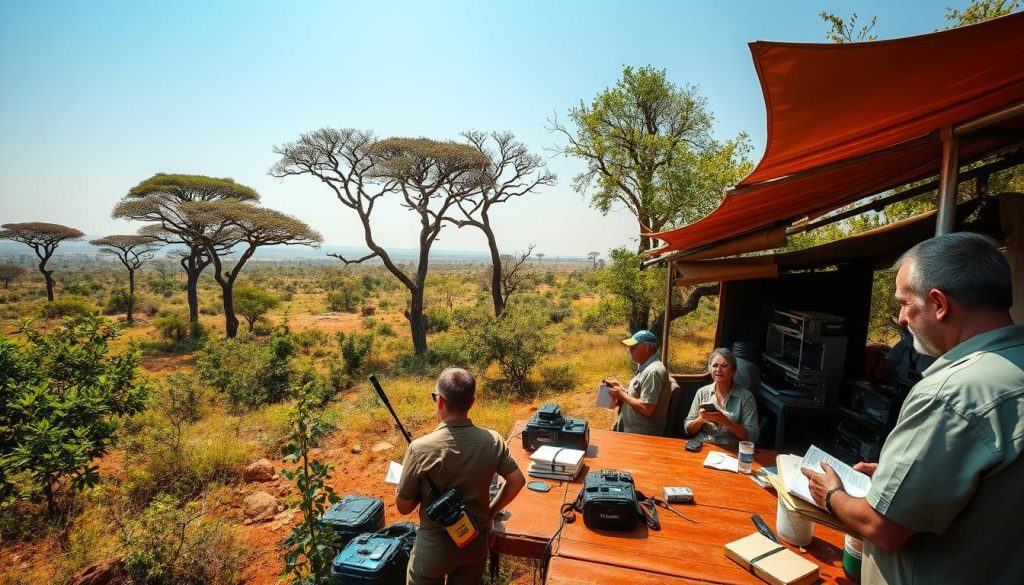
Imagine trying to take meeting notes while skydiving – that’s field biology in the savanna. Our team once spent three weeks tracking predators through grass taller than NBA centers. We learned that “visibility issues” means literally tasting your study subjects’ lunch through the air before seeing them.
Rainy season brought its own comedy: ever tried distinguishing territorial sneezes from mating snorts during a downpour? We developed an ear for canid communications that would make Dr. Dolittle request our field recordings. The real magic happens when coffee-stained observations about pack dynamics transform into peer-reviewed papers.
Then there was The Incident. Picture this: $15,000 camera traps being devoured by termites mid-study. Turns out cellulose housing tastes better to insects than our PhD candidates’ ramen stash. We now pack more silica gel than a museum archive.
These chaotic moments reveal nature’s truth: wildlife research isn’t about controlling variables – it’s about improvising with toothy collaborators who didn’t read the research proposal. The real data gold? Watching predators navigate their world with the ruthless efficiency of Wall Street traders, minus the stock tips.
Lessons on Teamwork for Athletes and Coaches
What do fourth-quarter comebacks, corporate pivots, and savanna survival tactics have in common? More than you’d think. Imagine NBA coaches studying quorum sensing like biologists. TikTok is full of athletes fake-sneezing during timeouts. Welcome to the era where sports teamwork meets evolutionary game theory.
We’ve spent hours studying elite teams’ clutch decisions. The magic number? Three. Three sneezes trigger a hunt in African wild dog packs. Three decisive plays often swing NBA finals. It’s not coincidence – it’s group decision-making coded into our DNA. As one coach said: “My playbook’s 50% Xs-and-Os, 50% primate psychology.”
Recent trends show pro teams using “consensus thresholds” for critical calls. Down 10 with four minutes left? That’s your three-sneeze moment. The championship-caliber collaboration we celebrate isn’t just about skill – it’s biological mathematics in Jordans.
But here’s the twist: modern athletes are rewriting the rules. Watch any timeout huddle now. The exaggerated sniffles. The dramatic nose wipes. Players are using quorum signals to troll opponents – and it’s genius. When your power forward starts fake-sneezing to psych out the defense, you know we’ve entered a new frontier of psychological warfare.
So next time you see a team rally, remember: you’re not just watching sports. You’re seeing 200,000 years of evolutionary strategy play out in dri-fit polyester. The court? Just a concrete savanna. The trophy? Basically a shiny antelope carcass. Game recognizes game.
Community Engagement: Education and Wildlife Protection
Who needs drones when you’ve got former poachers tracking predators with smartphone cameras? They can tell hunting sneezes from seasonal allergies. Botswana’s conservation programs have turned local communities into wildlife experts. They mix traditional knowledge with tech, making MacGyver jealous.
These programs change how we study predators. Imagine ex-poachers becoming citizen scientists, like Batman villains joining the Justice League. Wildlife conservation here is about protecting animals and changing the economy. Scholarships replace snares, and GPS data beats bullets, making living lions more valuable than dead ones.
The magic is in Predator studies becoming community-building exercises. Villagers discuss animal tracking like Reddit threads. Smartphone footage of hyena packs gets more views than cat videos. It’s about making humans active in protecting ecosystems, not just watching.
Botswana shows you don’t need Silicon Valley money for environmental solutions. Just clever incentives and respect for local knowledge. When communities lead in protection, even the sneeziest predator has a chance.
Essential Tools for Pack Leaders and Playmakers
Start by reading Dr. Neil Jordan’s Royal Society paper, “Sneeze Democracy in African Wild Dogs.” It shows group decisions in animals are like boardroom meetings. Add BBC Earth’s The Hunt documentary series, where David Attenborough talks about wild dog strategies.
Coaches should read Daniel Coyle’s The Culture Code. It uses Botswana’s Okavango Delta to explain teamwork. The New Zealand All Blacks rugby team also follows this approach, excluding lazy members.
Use the iNaturalist app to record animal behavior during runs. Seeing a squirrel defend itself can teach you more than many business courses. For movie lovers, Dogs in the Wild on Netflix offers insights into hunting strategies.
Local zoos now offer workshops on “predator psychology.” They teach executives about wolf packs for team-building. Nike Training Club also uses animal movements to improve coordination.
Follow Dr. Christie Wilcox on Twitter/X for wildlife insights. Her comparison of soccer team substitutions to hyena clan rotations went viral at the 2022 World Cup. The connection between sports and animal survival is getting more interesting.