Ever feel like the world’s moving too fast? Welcome to the modern information overload. Every notification wants your attention, and every headline seems urgent.
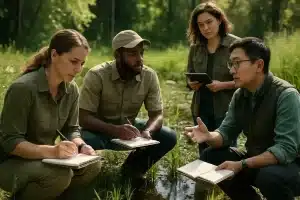
That’s why I was in Room 205 recently. I was with local entrepreneurs at the FTCC SBC roundtable. We weren’t solving world hunger, but we were doing something special. We were actually listening to each other.
This meeting was about hiring strategies and keeping employees engaged. But it turned into something more. It was a real effort to find clarity in the chaos. In a world that values loudness, sometimes the smartest thing is to listen closely.
That’s the strength of a solid editorial perspective. It cuts through the noise and finds the important stuff. It turns information overload into real understanding.
Let’s dive into how these talks help us deal with today’s complex world. Sometimes, the best ideas come from truly hearing what’s being said around the table.
Sports, Society, and Shifting Narratives: Finding Common Ground
Imagine if emergency rooms and sports teams used the same strategies. They both rely on relational coordination. This means working together, even when it’s chaotic. It’s like how surgeons work together in emergencies or how basketball teams perform under pressure.
The ERAS pathway in healthcare is a great example. It turns rivalries into teamwork. Nurses, surgeons, and administrators work together, sharing goals and respect. This is similar to how sports teams work together in the final minutes of a game.
The Utah Pediatric Trauma Network shows how to work together across different areas. They use boundary spanner roles to connect different teams. This is like sports mediators who help fans see beyond their team loyalties. When we apply this to sports media, we can turn divisive issues into chances for understanding.
Sports stories often reflect what’s happening in society. The same teamwork that saves lives in hospitals also shapes our sports experiences. When sports coverage focuses on the human side, we see the true beauty of competition.
So, when you watch a game’s intense ending, remember it’s not just a game. It’s about the teamwork that saves lives. The real question is, how can sports and life learn from each other? That’s a story worth telling.
How News Shapes Attitudes and Fandom
Ever wonder why your favorite team’s loss feels like a national tragedy after reading sports commentary? That’s the editorial magic at work. It turns raw events into stories that shape our loyalties and political views.
The Indigenous Politics workshop shows a worrying trend. Native scholars are underrepresented in political science. This lack of representation creates blind spots in our understanding of sports and governance.
When only certain voices are amplified in international news, we miss out. We think we see everything, but we’re missing parts of the crowd.

- Sports controversies become cultural battlegrounds
- Political movements gain or lose momentum
- Community issues get framed as national crises
- Fandom evolves beyond team colors to ideological affiliations
The lack of representation in newsrooms isn’t just about diversity. It’s about getting the full story. When Indigenous perspectives are missing, we miss out on understanding.
This distortion affects sports coverage too. Diverse analytics might reveal patterns missed by homogeneous newsrooms. The same play is seen differently through different lenses.
| Coverage Element | Diverse Newsroom Impact | Homogeneous Newsroom Impact |
|---|---|---|
| Political Analysis | Multidimensional perspectives | Single-angle reporting |
| Sports Commentary | Innovative analytics | Conventional narratives |
| Community Issues | Context-rich coverage | Surface-level reporting |
| International News | Nuanced understanding | Stereotype reinforcement |
The future of international news depends on breaking these patterns. We need more diverse perspectives, not just the same views recycled.
Next time you read about a controversial call or decision, think: whose perspective is missing? The answer might change how you see everything.
Global Perspectives on Community, Governance, and Inclusion
What if the secret to better global governance isn’t in policy papers but in how we talk to each other? Communities around the world are changing how we include each other through something simple: relational coordination.
The Veterans Affairs healthcare system tried something new. They brought together people from social work, nursing, and psychology. They didn’t want more rules, but to listen. And it worked because they focused on relationships first.
This idea is also seen at the University of Chicago’s Indigenous politics workshop. They show that transformational change happens when we treat governance like building a community, not just following rules.
The six-step relational coordination process is a guide:
- Shared goals over individual agendas
- Shared knowledge instead of information hoarding
- Mutual respect as the operating system
- Frequent communication that’s actually meaningful
- Timely problem-solving before issues escalate
- Communication that’s problem-focused, not person-focused
Imagine editorial teams covering global events with this approach. Instead of quick, shallow reporting, we’d get deep, meaningful stories.
This pattern is seen in healthcare and tribal sovereignty negotiations. When we focus on relationships, we find new solutions. As recent research shows, the best governance models are like ecosystems, not machines.
This relational approach is key for covering global events. The old “us versus them” reporting is outdated. Today, people want stories that show our connections and respect our differences.
The common thread in these examples? Human connection is the key to good governance. It’s not what you learn in school, but maybe it should be.
Key Takeaways for Business, Leaders, and Local Clubs
Let’s get to the heart of the matter. These big ideas work in many places, not just in fancy studies. Whether you’re in a hospital or a fantasy football draft, good communication is key.
The FTCC SBC Roundtable got it right with hiring, retention, and engagement. They brought local entrepreneurs together to share and grow. This advice is for any group wanting to keep their team happy and together.

Leaders can learn a lot from healthcare about teamwork. The key is psychological safety. When people feel safe to speak up, problems get solved better.
Creating a safe space isn’t about hugs. It’s about respecting ideas and growing strong ones. It’s like only the best ideas survive in a competitive world.
Here’s how to use these ideas in different places:
| Organization Type | Communication Challenge | Practical Solution | Expected Outcome |
|---|---|---|---|
| Local Business | Siloed departments | Weekly cross-team problem-solving | 15-20% faster project completion |
| Community Organization | Volunteer retention issues | Clear feedback channels + recognition | 40% higher volunteer return rate |
| Sports Teams/Clubs | Conflicting member priorities | Transparent decision-making processes | Improved participation & satisfaction |
| Healthcare Settings | Hierarchical communication | Flattened reporting structure | Reduced medical errors |
Different places face similar communication challenges. The solution is always better ways to talk. It’s like every fire needs water, no matter the size.
From an editorial perspective, these ideas work everywhere. They help surgeons and book clubs alike. It’s about creating safe spaces for honest talk.
Here’s how to start:
- Set clear rules for who talks to whom and when
- Make feedback regular and not scary
- Focus on how well you communicate, not just what you achieve
Local entrepreneurs learned the value of community. They say growth happens when we work together. The same goes for your team or club.
The main idea? Good communication leads to better results. It’s simple yet complex. Whether in a hospital or a meeting, the rules are the same. Psychological safety is key.
From this editorial perspective, success in leadership is about one thing: making honesty safer than silence. Now, make your world a bit more truthful.
Building Media Literacy: Navigating Misinformation
Welcome to the digital jungle where everyone’s an expert and nobody can agree on what color the sky is. In this era of information overload, media literacy has become a survival skill. It’s like learning to spot quicksand.
Remember that Indigenous Politics workshop we discussed? Natalie Jones-Kerwin from University of Wisconsin-Madison described it perfectly: “The workshop created an important opportunity to connect with professionals I hadn’t met, who brought highly specialized perspectives that directly informed my dissertation work.” That’s the secret sauce right there.
The real antidote to misinformation isn’t more fact-checking (though that helps) but more diverse perspectives at the table. When we only listen to people who think like us, we’re basically building informational echo chambers with great acoustics for nonsense.
So how do we break free? Let’s talk about the journalist’s secret weapon: lateral reading. It’s not about reading more deeply – it’s about reading more widely. Before you trust that shocking headline, open a few new tabs. Check what other sources are saying. See who’s funding the publication. It’s like dating – you wouldn’t marry someone after one cocktail, so why commit to a story after one glance?
Here’s your field guide to spotting narrative manipulation:
- Emotional hijacking: If a piece makes you furious within seconds, it’s probably designed to
- Source amnesia: “Experts say” isn’t a source – it’s a red flag
- False balance: Presenting both sides when 98% of evidence supports one side
- The urgency trap: “This will be gone by tomorrow!” usually means it’ll be here tomorrow
The most dangerous bias isn’t conservative or liberal – it’s thinking you don’t have any. Consuming international news from diverse sources acts like cognitive cross-training. It builds mental flexibility that makes you less susceptible to manipulation.
That workshop model works because it forces cross-pollination. When you regularly engage with perspectives that challenge your assumptions, you develop what I call “informational immunity.” You start recognizing patterns of manipulation the way wine connoisseurs detect notes of oak and berry.
Building media literacy isn’t about becoming cynical – it’s about developing healthy skepticism. It’s the difference between assuming everything is lies and understanding that everyone has perspectives. In the marketplace of ideas, the best currency is diverse connections, and the best investment is in understanding how international news gets made, shaped, and sometimes twisted.
Your brain will thank you. Your blood pressure might too.
The Future of International Editorial Content
Remember when news was just one voice? The future is more like a lively Chicago workshop. Editorial teams will work together like medical facilitators, connecting across boundaries.
The Indigenous Politics workshop organizers are making their vision real. They create yearly events for junior scholars to work together. This could change how we report on global events.
Imagine news that works like healthcare’s Quadruple AIM initiative. It focuses on teamwork over competition. We’d see reports that bring together business analysts, cultural critics, and climate scientists.
The future is about better conversations, not just more content. Workshop photos show students in deep talks, full of excitement. This is the future of editorial content – more dialogue, less lecturing.
When covering global events, we need to value many viewpoints. The success in healthcare and academia shows our media could be more engaging. It’s about time for a change.