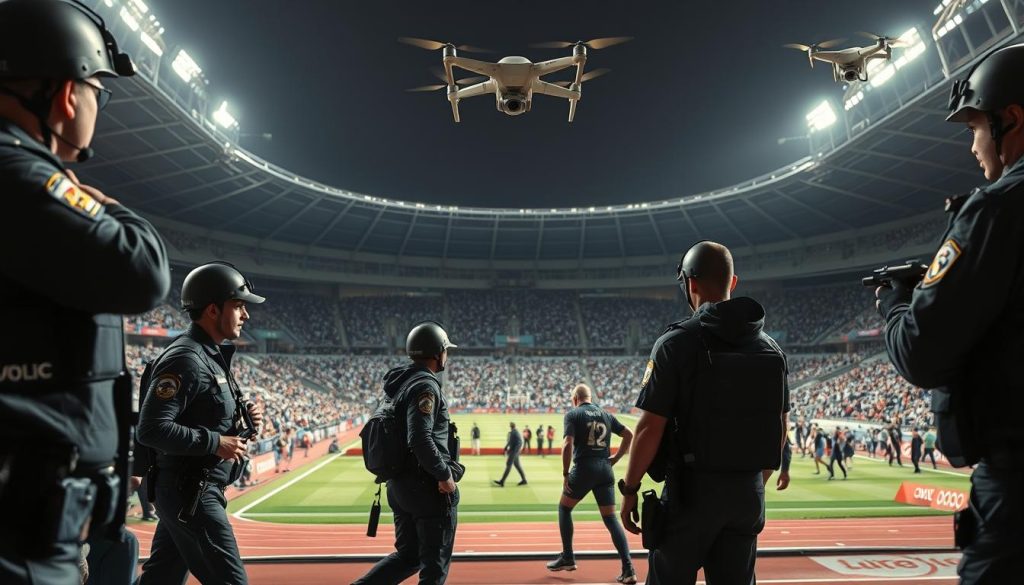
Mega sporting events are like terrorism’s ultimate show. The UNOCT says these events are perfect for extremists. They have packed stadiums, global media, and people celebrating together.
Remember ISIS’s attempt to disrupt a Paris soccer game? It was more than just an attack. It was a blow to our love for coming together.
From Munich in 1972 to recent Champions League threats, history shows a clear truth. Athletic arenas are battlegrounds. Why? Because it angers those who hate unity and shared joy.
Today’s safety teams are like Bond villains with a twist. They analyze drone patterns and hate speech trends. Qatar’s $1B on World Cup security wasn’t just for cameras. It was about protecting against modern threats.
Every successful event proves something big. It shows that working together can beat chaos. Even when the challenges seem huge.
Lessons from FARC/ETA and Other Notable Incidents
Let’s talk about insurgent groups that became famous, like FARC and ETA. They were so well-known, even Netflix couldn’t make it up. Their stories show a harsh truth: political theater often backfires harder than a discount fireworks stand. These groups didn’t just challenge governments – they accidentally wrote manuals on what not to do when chasing ideological goals.
FARC’s 52-year “camping trip” in Colombia’s jungles is a story of a Marxist rebellion gone wrong. It was like Breaking Bad but with more grenades and worse dialogue. ETA’s Basque separatist campaign showed you can’t win PR with bombs. Their final surrender speech was as exciting as a kid saying sorry after getting caught with cookies.
Here’s the kicker: both groups achieved more through negotiated exits than through bullets and manifestos. It’s almost as if prolonged violence makes people… dislike you? Modern movements should study these case files like Game of Thrones fans analyzing Red Wedding strategies – not for imitation, but as cautionary tales about overplaying your hand.
Yet, new actors keep trying the same old tricks. Maybe they missed the memo that 21st-century conflicts get TikTok commentary before they get resolutions. The real legacy of these groups? Proof that lasting change requires more than just good branding and bad choices.
Historical Playbook of Failure
History’s security blunders at major events are a long list of mistakes. From Olympic-sized oversights to marathon-level miscalculations, these failures show a pattern. Complacency is terrorism’s best friend. Let’s look at the playbook that keeps getting rewritten by the wrong team.
When Ideologies Collide With Athletics
The 1972 Munich Olympics were meant to show global unity. But, they became a lesson in how event safety protocols fail under ideological clashes. Palestinian militants easily entered the Olympic Village, showing weak security. This led to a 23-hour hostage crisis that was broadcast live, showing how TV ratings can spike quickly.
In 2013 Boston, two bombs turned a marathon into a crime scene. The Tsarnaev brothers were caught on surveillance cameras before the attack. But, without a strong risk management sports events system, the footage was ignored until it was used in court.
| Event | Security Gaps | Lessons Ignored |
|---|---|---|
| Munich 1972 | Unarmed guards, no perimeter checks | Athletes ≠ military targets |
| Boston 2013 | Fragmented intel sharing | Backpacks > bomb squads |
| Paris 2015 | Stadium entry bottlenecks | Suicide vests don’t queue politely |
| 2018 World Cup | Drone detection blindspots | Not all birds work for Putin |
INTERPOL’s 2018 World Cup report shows we’re playing catch-up. They foiled 17 attacks by talking to each other. This is a new idea for many, as most venues treat security like a solo effort.
The UN’s post-event evaluations (p109) say something important. They say crowd-sourced vigilance is better than CCTV when used right. This means your “see something, say something” campaign needs more social media and less old-fashioned methods. If Instagram can tag your location in real time, why can’t security teams?
Building Robust Security Protocols: Planning and Staff Training
Ever tried herding cats while juggling flaming torches? That’s what crafting airtight digital defense systems feels like in 2024. It’s not just about setting up firewalls. You’re building a cultural immune system for your organization.
Even the best encryption won’t save you if your team doesn’t follow best practices. Dave from accounting using “password123” for everything is a big problem.
The magic happens when tech planning meets human behavior. Think of your protocols as a heist movie script. You’re protecting digital Fort Knox with smooth multi-layered authentication and sharp training programs.
Why does this matter? Because 93% of breaches start with human error. Your team is your first line of defense, like the Avengers. Effective training turns them into cyber-sentinels who spot threats fast.
Here’s the kicker: The best protocols adapt faster than TikTok trends. Regular stress tests and drills turn theory into action. It’s like teaching your grandma to use FaceID – gradual and essential.
This isn’t about creating paranoia. It’s about building digital street smarts. When your team can spot suspicious activity like a sommelier, you’ve upgraded from vulnerable to virtuoso.
From Blueprint to Boots on Ground
Planning for mega-events is not just about lists. It’s about mastering chaos. Imagine Taylor Swift’s rehearsals mixed with Sun Tzu’s Art of War. Every detail is rehearsed until it’s second nature.
The UN’s Three-Stage Process turns rules into a survival guide. It’s where getting ready meets being cautious in a good way.
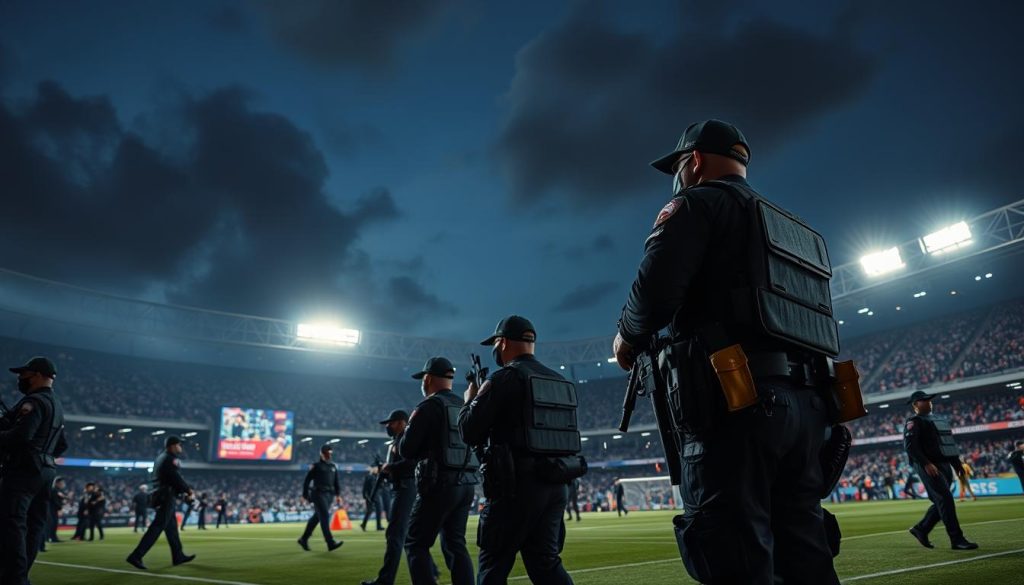
The Chessboard Approach
The 2022 World Cup team in Qatar didn’t just play chess. They created the board. They treated each venue like a game of Risk, facing off against both political tensions and rowdy fans.
Here are some of their key strategies:
- Biometric ballet: Facial recognition systems as smooth as Neymar’s moves
- Crowd calculus: Flow dynamics like Tokyo’s subway for stadium crowds
- Vendor veto power: 72-hour checks as strict as FIFA’s VAR
Scenario Planning: Expecting Pandas at Wimbledon
Qatar’s team prepared for drone attacks during games. They were serious about planning for the unexpected. This approach led to plans for scenarios as strange as:
| Event | Planned Response | Real-World Parallel |
|---|---|---|
| Rogue drone swarm | Signal jamming + net cannons | London 2012 no-fly zone |
| Biohazard threat | Mobile decon units on standby | Tokyo 2020 COVID protocols |
| VIP kidnapping attempt | Decoy motorcade strategy | Brazil 2016 Olympic escort tactics |
The real test of event safety protocols is planning for the unthinkable. Qatar’s team even practiced for a pitch invasion by activists. They knew that when politics meets sports, security must be ready for anything.
Collaboration with International and Local Agencies
Imagine the Olympics as the world’s biggest potluck dinner. Everyone brings their special dish. Some offer high-tech gadgets, while others share diplomatic skills. But who’s really in charge?
Hosting the Games is like trying to herd cats through a laser tag arena. The French National Olympic Committee teamed up with EDF and LVMH. This mix of nuclear power and luxury goods shows that collaboration is about shared goals, not matching logos.
Tech firms like Thales lead in cybersecurity efforts. Groups like CNOSF work behind the scenes on sponsorships. Rio’s 85,000-strong security team was a result of global partnerships blending military skill with corporate innovation.
Is the Olympics a sporting event or the world’s most expensive team-building exercise? The answer lies in the details of contracts and assessments. Bon appétit, humanity.
The Spaghetti Junction of Security
Global security teamwork sounds noble, but it’s chaotic. Imagine trying to understand 3am memes from Interpol agents. It’s like a messy mix of protecting international sports events.
This world is a labyrinth where the FBI and snack cart vendors share intel. GDPR compliance officers and facial recognition engineers often disagree. It’s more like “The Office” meets “24” than James Bond.
Breaking Silos Without Breaking Laws
The UN’s guide on cooperation sounds perfect, but reality is different. At France’s 2024 Olympics, Algerian counter-terror specialists work with TikTok creators. They monitor threats using both satellites and street smarts.
- The Midnight Meme Exchange: Interpol’s encrypted WhatsApp groups mix missile schematics with viral cat videos
- Camel-Powered Surveillance: Dubai’s desert patrol uses ancient tracking with AI drones
- The GDPR Debacle: Euro 2020 organizers had to pixelate surveillance footage due to Europe’s privacy laws
When Europol Meets Your Neighborhood Watch
INTERPOL’s IMEST program is about sharing databases and teaching cybercrimes units. They learn to interpret suspicious Google searches from Marseille kebab shops. The real magic happens when:
| Global Agency | Local Partner | Unlikely Tool |
|---|---|---|
| Europol Cybercrime Centre | Parisian Café Owners | Free Wi-Fi login screens |
| FBI Joint Operations | Stadium Beer Vendors | Inventory checklists |
| UN Counter-Terror Unit | Influencer Marketing Teams | Instagram Story analytics |
This isn’t just international sports security. It’s like geopolitical improv theater. The challenge is keeping constitutional safeguards while letting Tokyo cybersecurity scan Manchester United fans’ selfies. It’s all about explaining data encryption to a popcorn vendor.
Risk Assessment: Targeting Vulnerabilities and Contingencies
Ever tried playing chess without knowing your opponent’s next move? That’s what risk management feels like when you skip the vulnerability phase. In today’s world, even coffee shops plan for almond milk shortages. Ignoring risks is not just foolish—it’s a serious mistake.
Risk assessment is like a digital smoke detector. It doesn’t stop fires, but it alerts you to grab the extinguisher. The Sport Event Security Assessment Model (SESAM) is more than just rules. It’s a seven-step guide to avoid big surprises.
Threats change fast, like TikTok trends. Yesterday’s safe system is today’s risk. That’s why consequence evaluation is key. It’s the difference between a small problem and a big crisis.
To beat uncertainty, treat your critical assets like VIPs at a Met Gala. Identify, protect, and don’t leave their safety to chance. Even Batman had backup plans for his plans.
Playing Whac-A-Mole With Threats
Security teams today face more than just pickpockets and rowdy fans. They battle threats like AI chaos and activists in nacho costumes. Let’s look at two big challenges in risk management sports events – drones and protesters.
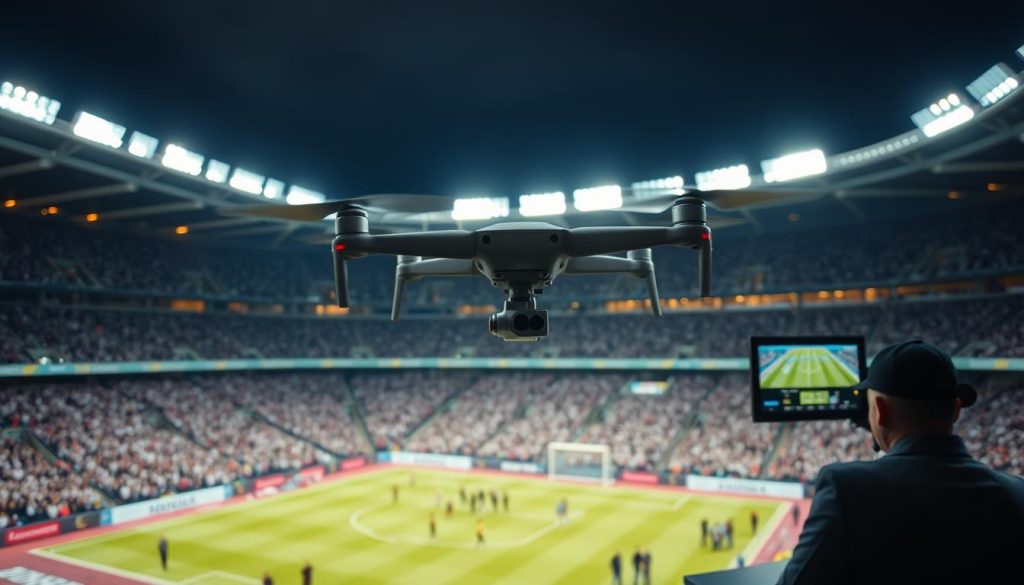
The Drone Dilemma: Birds Aren’t Real
At the World Cup in Qatar, drones disguised as falcons caused trouble. To solve this, they used special tech to spot fake birds from far away. This is real, not science fiction, and it’s part of today’s security best practices sports.
The UN sees drones as a big threat. So, venues must:
- Use “bubbles” to block signals around VIP areas
- Train staff to spot fake birds
- Plan for drone attacks
The Super Bowl even made parking lots secure. They did this because a simple selfie could be a hacker’s entry point.
When Climate Protesters Crash the Party
Remember when a protester glued to the net delayed the French Open? Today’s activists cause big disruptions. Security teams must prepare for:
- Deepfakes that look like celebrities
- Glitter bombs in corporate boxes
- Flash mobs that look like emergencies
A report shows stopping these stunts is tough. It needs both understanding and strong security. Venues now practice dealing with all kinds of threats.
Crisis Management: What Happens When Security Fails?
Imagine a scene from a movie where “foolproof” plans fail quickly. When security breaks down, chaos erupts. What happens then? We’ll dive into damage control with the excitement of a Netflix show.
Today, risk management isn’t just about avoiding mistakes. It’s about owning the aftermath. Think of it like jazz, where you improvise when the music is gone. The UN’s guide for big events shows how to prepare and adapt fast.
True strength isn’t shown in good times. It’s shown in tough times. When things go wrong and plans look like art, that’s when leaders shine. They solve problems quickly, like a comedian.
Have you noticed how disaster movies always have a “we’re not gonna make it” moment? Crisis response is similar. It’s not about stopping every problem. It’s about turning panic into progress, step by step. That’s a story worth watching.
When Sh*t Hits the Stadium
Imagine a stadium full of excitement, like a pressure cooker ready to burst. Now, imagine someone opening the lid. That’s what happens when event safety protocols face their biggest test. Let’s explore what happens when disaster strikes.
Damage Control: From Panic to PR
The 2013 Boston Marathon bombing changed how we respond to emergencies. It was about more than just medical help. It was about controlling information fast.
Security teams follow three key rules now:
- The 90-Second Rule: They must send out messages quickly, faster than a TikTok trend
- Crowd Calculus: Barcelona used physics to design better exits, avoiding crowd crush disasters
- K-Pop Protocol: They studied fan behavior to stop the spread of false information
But, 43% of security measures are just for insurance, not to really protect us. The UN’s reports show most places don’t plan well for emergencies. They make evacuation plans that are confusing, even when things are calm.
The Aftermath Playbook: Lessons or Lip Service?
After an emergency, we often look back and wonder what to do next. It’s like choosing a path in a book:
- Option A: Make real changes based on solid threat analysis
- Option B: Just show off “enhanced security” that looks good on paper
The 2024 Paris Olympics are taking a different approach. They’re using experts in psychology and social media to improve safety. But, if we focus on looks over real safety, we’re just pretending.
So, will we learn from past mistakes and improve, or will we ignore them? The choice will decide if we build safe places or just show off.
Future of Sport Security: Tech, Training, and Transparency
Imagine a world where stadiums scan crowds like Tony Stark’s lab analyzes threats – before they happen. This isn’t sci-fi anymore. We’re moving towards a future where keeping athletes and fans safe combines high-tech gadgets with top-notch training and openness.
But will this mix make games safer or turn stadiums into dystopian theme parks?
Facial recognition systems can spot troublemakers quickly, like LeBron dunks a ball. Drones with thermal cameras watch over parking lots like robotic hawks. But, 78% of fans in an ESPN poll are okay with giving up privacy for safety.
Are we all ready to give up our selfie rights for a safer experience?
Training programs using VR simulations are a game-changer. They make Navy SEAL drills seem easy. Security teams practice crisis scenarios in digital versions of stadiums.
Blockchain ticketing systems are also making a big impact. They’re beating counterfeiters like Shohei Ohtani’s fastball. And, leagues are showing off their security prep live, proving they’re not hiding anything.
This isn’t just about stopping thefts or pitch invaders. It’s about rebuilding trust in sports. The future is about innovation, education, and proof that safety doesn’t have to feel like a surveillance state. Batter up.
Tomorrow’s Battlegrounds
Imagine a 2030 World Cup final where jerseys scan for explosives and track your heart rate. This is the world of sports security, where innovation meets intrusion. The game is changing fast, making us wonder: Can we stay ahead of threats without becoming the enemy?
AI Referees and Blockchain Bouncers
At the 2022 Winter Olympics, China used facial recognition to catch banned spectators. Norway’s counter-terror units practice in Minecraft stadium replicas. Blockchain could end ticket scalping with digital passes.
But what if smart tattoos become the only ID? The UN warns about old systems causing future problems. It’s a cautionary tale for the QR code era.
The Ethics of Predictive Policing
Brazil’s 2027 Copa América used AI to spot hooligans based on social media. It worked, but once flagged Taylor Swift lyrics as threats. Predictive policing in sports raises questions about bias and privacy.
Germany’s Bundesliga is testing crowd biometrics to detect stress without identifying people. It’s a mix of cybersecurity and crowd control. The goal is to find a balance that everyone can support.
The future of sports security isn’t about tech wars. It’s about creating systems that are fair and just. We must find a way to protect without losing our humanity. Are you ready to play?