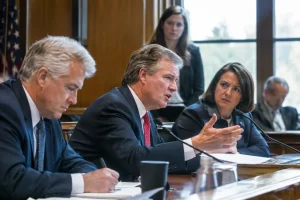
Ever watch a political election and wonder what’s really at stake? In Andorra’s recent vote, it wasn’t just about who gets the corner office. It was about who gets to rewrite the rulebook for the nation’s wallet.
Tax law isn’t some dry technical manual—it’s a barometer of shifting ideologies. As one notable analysis puts it, these rules are “shot through with politics.” They reveal who wins and loses when the economic game changes.
Think of it like sports doping regulations. Everyone talks about fairness, but everyone’s also looking for an edge. In Andorra, the post-election economic strategy isn’t just numbers on a page. It’s a high-stakes match where the spectators are actually the players.
When new leaders take charge, they don’t just change speeches—they change financial policy. And that shift can either fuel national ambitions or leave them scrambling for resources. It’s where political dreams crash into economic realities.
The Interplay of Fiscal Policy and National Sports Investment
Politics and sports investments are closely tied. When governments change, sports venues often face funding shifts. It’s like a game where the rules change without warning.
Political Change and the Impact on Sports Venues
New governments want to leave their mark. Sometimes, they open new stadiums. Other times, they cut funding for existing ones. The sports industry often gets caught in the middle.
Across the globe, different governments have different priorities. Left-leaning ones might focus on community centers. Right-leaning ones might back big events for economic gains. Both have their merits, but sudden policy changes can harm sports.
When a new party takes power, things can get tough:
- Existing sports projects might be delayed indefinitely
- Budgets might shift to new projects instead of maintenance
- Local clubs face uncertainty about funding
- Athletes become pawns in global politics
Case Study: Funding Grassroots Sports After Political Upheaval
Let’s look at a real example. After a big political change in a European country, the new government had to choose. They decided to fund community sports instead of elite programs.
This choice was celebrated at first. But pulling out of international competitions hurt national pride. It was like trading a Ferrari for bicycles—practical but lacking prestige.
This example shows the fine line in sports investment. Countries want to host big events to show strength. But local communities just want safe places for kids to play.
The data suggests that successful nations do both. They invest in local sports and sometimes splurge on big events. It’s like eating veggies and enjoying dessert.
The sports industry adapts to these changes. Smart groups build relationships across party lines. They show value beyond just winning medals. They become key parts of the community.
In global politics, sports investment is powerful. But the best governments focus on more than just filling stadiums. They aim for engaged, healthy citizens who are proud of their national teams.
Global Trends in Economic Inclusion and Fair Play
Welcome to the world’s most expensive game of Monopoly. The dice are loaded, and properties aren’t fair. The global economy is like a rigged board game. Some start with Park Place, while others can’t afford Baltic Avenue.
Recent research shows a harsh truth about economic inclusion. It often depends on your political views. A working paper on political polarization reveals partisan segregation. It gives one team an unfair advantage in economic decisions.

Executive teams are mostly Republican (66%), shaping the economy in their favor. This isn’t just about politics. It’s about who gets funding and opportunities.
Countries use sports investments as a soft power tool. China’s 2008 Olympics and Brazil’s 2016 Games are examples. These aren’t just for show. They signal to global markets which nations play fair.
Political polarization affects our economy deeply. It turns economic decisions into partisan battles. Everyone loses, except those in charge.
This trend creates winners and losers before the game starts. The real question is: Can we create fair rules for everyone? Or will we always have imbalances in economic inclusion?
The Voice of Athletes: Advocacy for Better Funding
When athletes talk about financial policy, it’s a big deal. They’re not just playing games anymore. They’re changing the rules on sports funding for millions to see.
Sports arenas have always been more than just places to play. They’ve been stages for political messages. From Tommie Smith’s famous gesture in 1968 to today’s WNBA protests, athletes have spoken out for economic fairness. It’s like a halftime show where they negotiate their contracts live.
This creates strange political alliances. Conservative athletes might push for funding based on national pride. Progressive athletes see it as a fight for social justice. But they all shout the same thing: “Show me the money!”
Why do politicians listen to athletes? It’s simple: no one wants to cut funding right before the Olympics. The public’s opinion is faster than any sports referee’s.
Athlete advocacy is like an early warning for economic issues. When sports funding drops, it points to bigger problems in financial policy. These athletes are like canaries in a coal mine, but with big endorsements and fans.
This leads to a shift in power. Scoring goals is now less important than getting funding. Athletes are changing how sports are funded, one viral moment at a time.
Preparing for a Future of Fiscal and Community Change
Imagine a world where your local Little League’s funding depends on your congressperson’s party. Research shows we might be heading there. Partisan alignment is increasingly deciding financial relationships, even in sports funding.
This isn’t just theory. It’s becoming our reality. Republican corporations might fund red state sports, while Democrats fund blue areas. It’s like gerrymandering in sports, where politics beats community needs.

Research shows a harsh truth: partisan homogeneity has economic costs. Communities might lose sports funding based on politics, not need. This affects kids from all political backgrounds, not just winning games.
So, what’s the plan? We need “political athleticism” – to navigate these divides without injury. This means a smarter economic strategy that goes beyond politics.
Here’s how communities can prepare:
- Develop bipartisan funding coalitions that focus on youth, not politics
- Create clear funding criteria based on community needs
- Build cross-party relationships before funding crises hit
- Implement measures to track community impact
The aim isn’t political points. It’s ensuring every kid has a place to play, no matter their parents’ vote. That’s the economic strategy worth fighting for – where community needs win over politics.
Because in the end, the only color that should matter in sports is the team jersey – not the electoral map.
The Interplay of Fiscal Policy and National Sports Investment
The sports world is where money policies and politics meet. Governments see big events as a way to boost jobs, tourism, and fame. But, there’s more to it than meets the eye.
Studies show a worrying trend. These big projects often just move money around, not really creating new jobs. It’s like taking money from one pocket and calling it a win.
But, the costs are high. Communities face:
- People losing their homes to new developments
- Old buildings and roads ignored
- Costs that could fund many small projects
Politicians choose these projects for a reason. They look good on TV, even if they don’t make sense financially.
Let’s look at sports investments:
| Investment Type | Promised Benefits | Actual Outcomes | Community Impact |
|---|---|---|---|
| Mega-Event Hosting | International prestige, tourism surge | Temporary boost, long-term maintenance costs | Displacement, increased living costs |
| Elite Stadium Construction | Job creation, economic revitalization | Mostly temporary construction jobs | Lost public spaces, traffic issues |
| Grassroots Programs | Long-term talent development | Sustainable community engagement | Improved public health, social cohesion |
| Sports Infrastructure Upgrade | Modern facilities, increased usage | Higher maintenance, underutilization | Selective access, membership costs |
This focus on big stadiums is unfair. While cities spend on pros, community fields and youth programs suffer. It’s like feeding the fish in the tank, but ignoring the rest.
We need better ways to invest in sports. Ones that help both top athletes and local kids. A nation’s true strength comes from its community fields, not just its stadiums.
The Voice of Athletes: Advocacy for Better Funding
Who knew athletes would become the sharpest economists in the room? They’re not just sprinting on tracks; they’re sprinting through fiscal policy debates with the grace of a well-executed play.
This shift in advocacy mirrors the data from political polarization studies, where financial decisions get tangled in partisan webs. Athletes now argue funding with spreadsheets, not just sweat.
In the arena of global politics, these voices cross borders like trade deals. They form alliances that shame governments into smarter investments, proving sports funding isn’t a left or right issue—it’s a win-win.
Imagine a world where athletes draft policy as smoothly as they draft plays. That’s the future they’re lobbying for, and honestly, it’s a game I’d watch any day.