While humans were building pyramids and starting civilizations, goats were making their own way. These clever animals have been outwitting us for thousands of years.
The British primitive goats of the Cheviot hills are nature’s ultimate survivors. They’ve kept their unique genetics for 5000 years. They formed their own independent world, watching empires come and go with curiosity.
Their story is like an animal version of Cold Mountain. It’s about escaping farm life and fighting against being domesticated. It makes you think: in livestock evolution, who’s really in charge?
This chapter in animal history shows creatures that have survived climate changes and human empires. Their survival teaches us about nature’s strength and the secrets happening around us.
The Science of Domestication: Genetics and Evolution
Imagine telling a goat they’re about to become humanity’s longest-running behavioral experiment. Some said yes. Others gave us the animal kingdom equivalent of “I’d prefer to be freelance.”
The goat domestication story starts around 10,000 years ago in the Fertile Crescent. Early farmers found these agile mountain climbers could live on poor lands. They became walking pantries, giving us milk, meat, and fiber.
But genetics shows a twist. While most goats accepted the barnyard life, some rebels staged the original “Great Resignation.” These Neolithic escape artists formed feral populations, keeping their genetic purity.
These fugitives from farming became living time capsules. Their DNA shows what prehistoric goats were like before humans changed them. The Cheviot goats of Britain are a perfect example.
What makes these “British primitive goats” so fascinating? They kept their genetic integrity while living with humans. They’re like that friend who never sold out to corporate culture.
The science behind goat domestication isn’t just about what changed. It’s about what didn’t. These feral populations show parallel evolutionary paths – nature’s control group in humanity’s agricultural experiment.
Genetic studies show these rebel goats avoided our selective breeding. They kept traits like stronger immune systems, diverse coat patterns, and that iconic stubborn independence.
Their story challenges how we view goat domestication. It wasn’t a one-way street of human mastery. Some goats voted with their hooves and chose freedom over fodder.
This genetic rebellion offers priceless insights. Scientists can compare domesticated and feral genomes to understand evolutionary pressures. It’s like having two versions of history – the official record and the underground archive.
The Cheviot goats teach us about adaptation. They thrived in harsh environments without human help. Their success story reads like a wilderness survival manual written in DNA.
Modern goat domestication research continues uncovering surprises. These animals weren’t passive participants in human history. Some were willing partners. Others were escape artists writing their own evolutionary destiny.
Next time you see a goat, remember: their ancestors might have chosen you. Or they might have chosen freedom. The genetic evidence suggests both stories are equally true.
Goats in Ancient Sport and Modern Mascot Culture
Ever wonder how a creature known for eating tin cans became a symbol of athletic prowess? The journey of sports mascots from ancient rituals to modern stadiums is more bizarre than you might think.
The U.S. Naval Academy started using goats as mascots in 1890. It wasn’t just for fun. Sailors kept goats on ships for fresh milk and their ability to stay steady on rough waters.
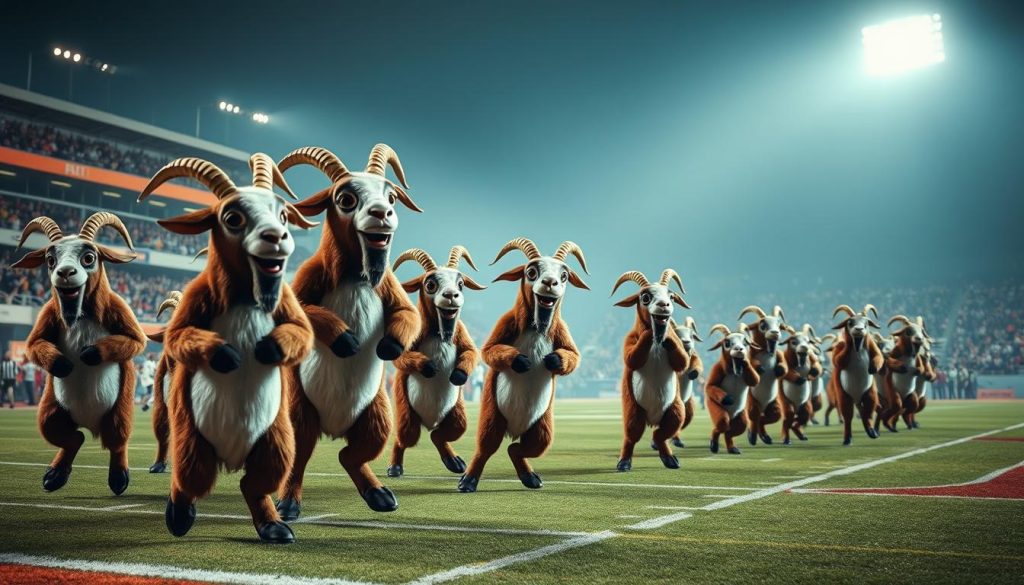
The stories behind the goat mascot are varied and sometimes wild. Some say midshipmen took a goat for luck. Others claim a cadet dressed in goatskin and ran around the stadium. It’s a mix of truth and tall tales.
Why did the Navy choose a goat, an animal that climbs mountains, as their mascot? It’s a unique blend of land and sea that somehow works. It’s a tradition that might have started as a joke against Army.
The line of “Bill” mascots is like a royal family. From El Cid to Satan to Bill XXXVII, these goats have seen many games. Each Bill carries the tradition, but probably wishes for more grass.
Goats aren’t just for the Naval Academy. They show up in Olympic mascots and other sports events. They symbolize tenacity, agility, and determination—qualities any team would want.
The Naval Academy’s goat tradition shows how sports mascots start as practical tools and become cultural icons. What started as a practical use became a symbol of pride and rivalry.
Next time you see a goat mascot, think about it. You’re not just seeing a farm animal in a jersey. You’re seeing a long history of humans and animals coming together, even on the football field.
Breeds, Behavior, and Adaptation Around the World
If goats had LinkedIn profiles, their headline would read: “Adaptable professional specializing in thriving anywhere humans can’t.” These creatures are nature’s ultimate survivalists. They master environments from mountain peaks to isolated islands with ease.
The British Isles alone showcase this remarkable adaptability. It’s like a geographic case study in caprine evolution. From the rugged Snowdonia herds to the Lundy island population, each group has its own unique lifestyle.
Each group developed distinct characteristics based on their environment. It’s like regional dialects, but with horns and hooves. The Cheviot goats perfected their elusive nature through centuries of strategic human avoidance.
Other populations developed different survival strategies. Some remain wary, while others have learned the art of the polite tourist approach.
Their behavioral adaptations read like masterclasses in resource management. These animals don’t just survive – they conduct ongoing anthropological studies of humans. They’ve decoded our patterns, learned our schedules, and mastered the art of coexistence on their terms.
The diversity of goat breeds across these regions tells a story of environmental negotiation. From the Black Mountains to Scottish highlands, each population represents generations of subtle evolutionary tweaks. They’re not just living in these landscapes – they’ve become living expressions of them.
What makes these goat breeds fascinating is their behavioral intelligence. They don’t merely adapt physically; they develop complex social strategies. Some groups maintain distance as survival policy. Others cautiously engage when benefits outweigh risks. It’s wilderness economics meets evolutionary psychology.
This global adaptation story makes goat breeds among the most successful mammalian colonizers on Earth. They’ve turned isolation into opportunity and harsh conditions into competitive advantages. Their success suggests they might be the real intellectuals in this human-goat relationship.
How Goats Support Rural Communities and Families
While city folks debate oat versus almond milk, rural families have known the secret for centuries. Goats turn weeds into white gold. They’re not just animals; they’re the original sustainability experts on family farms across America.
Goats make marginal land valuable with efficiency that rivals Silicon Valley startups. They’re like Swiss Army knives – milk producers, lawn mowers, and friends all in one. Their agility is surprising.
Goats have been valuable for centuries, even in naval records as living pantries on long voyages. Sailors got fresh milk when refrigeration was far away. Today’s homesteaders value them just as much, with better Wi-Fi.
Modern family farms use goats for many things:
- Dairy production with little setup
- Meat that’s popular in many cuisines
- Weed control that beats herbicides
- Manure for organic gardening
Social media shows goats are more than livestock; they’re family. Those viral videos of baby goats in kitchen sinks? They show a lifestyle where animals and humans live together well.
The economic effect on rural communities is huge. Goats need less land than cattle, helping small landowners. They’re great for new farmers trying out farming.
| Resource Input | Cattle Requirement | Goat Efficiency | Community Impact |
|---|---|---|---|
| Land per animal | 2-5 acres | 0.5-1 acre | More small farms viable |
| Feed costs | High (grain dependent) | Low (browsers) | Lower operating expenses |
| Startup investment | $3,000-$5,000 | $500-$1,000 | Lower barrier to entry |
| Water consumption | 30-50 gallons daily | 5-10 gallons daily | Better drought adaptation |
Research from the National Institutes of Health backs what rural families have known for ages. Small ruminants like goats offer nutrition and economic strength. In places far from grocery stores, fresh goat milk is a lifeline.
Goat husbandry is scalable. From a single doe for a family to big operations for cheesemakers, goats fit any homestead life.
They’re great for weed control where machines can’t reach. Goats eat invasive species, solving ecological problems and providing food.
In a time of big farms, goats are the small farmer’s ally. They’re not just surviving; they’re shaping sustainable, community-focused farming in the 21st century.
Sports Teams and the Goat as a Symbol
What animal can show both athletic perfection and being blamed? Only goats do it with ease.
Goats have changed from simple barn animals to sports heroes. This change is a big shift in how we see them.
Navy’s Bill the Goat is a real mascot, showing team spirit. It’s not just a logo but a symbol of pride from 1893. The goat looks calm, even when fans go wild.
The GOAT term means Greatest Of All Time. It makes goats a high praise for athletes. When we call Kobe or Brady the GOAT, we’re giving them a special status.
It’s funny how we use “scapegoat” for blame and call athletes GOATs for greatness. Sports are unique in this way.
Today, sports teams love this mix. The goat mascot shows tradition, while the GOAT term is about fame. Both help create legends we love to watch.
When we talk about sports greatness, we’re part of a long tradition. Goats, once just animals, now symbolize our love for sports.
Conservation, Ethics, and the Future of Livestock
Our goat story takes a sharp turn into modern conservation issues. These goats, once rebels, now face threats from our own systems.
Wild goat populations are in a legal gray area. They’re not fully wild or domesticated. They wear satellite collars and live like ancient times.
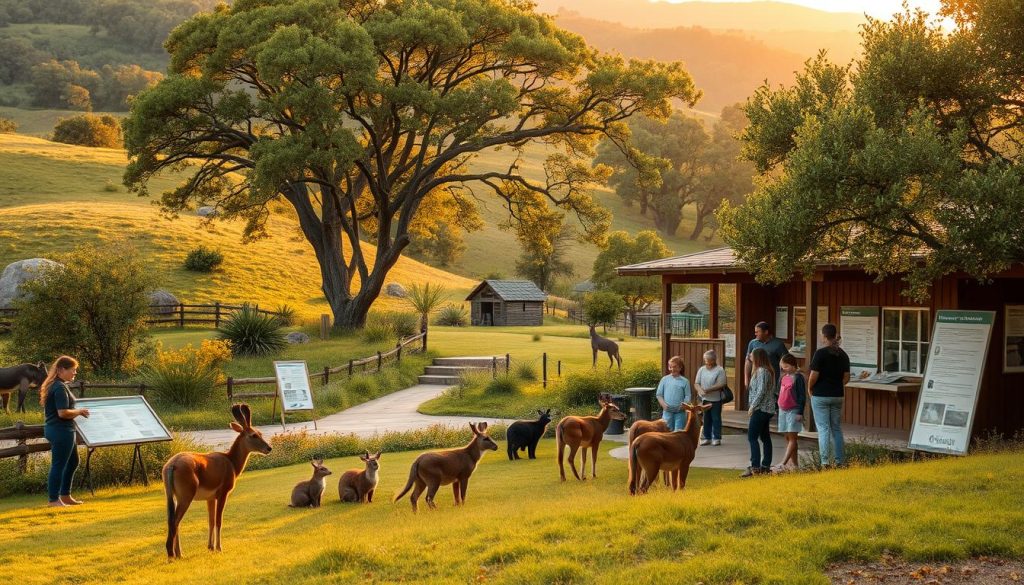
Conservation issues show us uncomfortable truths about our nature relationship. Landowners can remove these goats if they see them as a problem. It’s like having control over evolution.
Satellite tracking collars on Cheviot goats show our irony. We use advanced tech to track animals that lived before writing. We spend thousands to monitor animals that survived for centuries without cost.
These goats raise big ethical questions. They are feral domesticated animals living wild for generations. They challenge our neat categories and teach us about survival and adaptation.
| Conservation Approach | Traditional Wildlife | Feral Goats | Future Solutions |
|---|---|---|---|
| Legal Protection | Full protection | None | Hybrid status |
| Tracking Methods | Standard monitoring | Satellite collars | Community reporting |
| Farmer Relations | Compensation programs | Direct conflict | Coexistence plans |
| Educational Value | Established programs | Emerging example value | Integrated animal education |
This isn’t just about goats. It’s about rethinking conservation for our time. How do we protect species that don’t fit our categories? The answer might be better animal education that understands these complexities.
Their future depends on solutions that respect their unique status. Maybe we should stop trying to categorize and learn from these four-legged philosophers instead.
Nature Education: Learning with Animals at School
Who knew the most effective teachers might have four legs and a fondness for chewing homework? Goats have quietly become education’s most unlikely teaching assistants. They bridge the gap between textbook learning and real-world understanding.
At the Naval Academy, their goat mascot program isn’t just tradition – it’s a living history lesson. Students learn about naval heritage through animal care. They discover responsibility through daily feeding routines. The goats become fuzzy professors in their own right.
Elementary schools are getting in on the action too. Urban children who think milk comes from cartons suddenly meet the source. It’s agricultural enlightenment delivered with a friendly “baa.” These programs create instant connections to food systems and environmental cycles.
The educational value extends far beyond basic farming knowledge. Goats demonstrate:
- Social structures and herd behavior
- Environmental adaptation techniques
- Sustainable land management
- Basic veterinary science concepts
Teachers report that animal interaction in school programs teaches patience better than any lecture. Children learn responsibility through actual care-taking duties. They develop practical skills that screens simply can’t provide.
Programs like those at educational farms show how goats break down urban-rural divides. City kids gain hands-on experience with animal husbandry. They learn where food originates before it hits supermarket shelves.
| Educational Benefit | Traditional Classroom | Goat-Assisted Learning |
|---|---|---|
| Responsibility Teaching | Theoretical assignments | Actual animal care duties |
| Science Comprehension | Textbook diagrams | Live digestion demonstration |
| Environmental Awareness | Video presentations | Direct land interaction |
| Social Skills Development | Group projects | Herd behavior observation |
These horned educators make complex concepts accessible. Kids grasp ecosystems by watching goats maintain vegetation. They understand adaptation by observing different breeds thrive in various climates.
The future of nature education might just depend on these charismatic ruminants. They’re not just animals – they’re master teachers in disposable coats.
Fun Facts: Why Goats Are Smarter Than You Think
Ever wonder why goats keep showing up in ancient myths and modern memes? They’ve been outsmarting humans for thousands of years. They do it all with a cool, nonchalant attitude.
Goats don’t just survive; they thrive in many places, from mountain cliffs to football stadiums. Their ability to adapt is truly genius. They find ways to get food or escape that leave us amazed.
Goats are also very smart socially. Research from Psychology Today shows they form complex relationships and know individual humans. They’re like pros at social networking, without phones.
These clever animals have become a big part of human culture for centuries. They’ve been quietly leading the way while we thought we were in charge. They’re the ultimate cultural adapters, playing the long game.