


Do you remember when stadium crews used push-to-talk devices that sounded like bacon on a grill? Sprint Nextel aimed for military-grade reliability for those old walkie-talkies. Now, we have white-box routers under arena seats, bringing precision to the game.
In 2008, MLB Advanced Media worried about pirates stealing their streams. Then, Comcast introduced Janus infrastructure, a virtual network that makes cross-media ecosystems seem easy. It’s not just about better pictures; it’s about using data like Moneyball.
The key player is Reliability. What started as a fight against piracy turned into a quest for perfect streams. Now, viewers want replays as clear as a shortstop’s move. The tech behind it is as complex as a double-play.
The game has changed from fighting piracy to delivering perfect streams. The ghosts of Sprint Nextel’s dropped calls are watching, whispering about IP multicasting.
How Tech Reliability Powers Fan Experiences
Ever watched a big game moment on a screen that freezes up? That’s what happens when live sports communication systems can’t keep up with excitement. Comcast’s edge cloud now serves 63 million locations, enough to stream Ronaldo’s free kicks clearly. But, if your feed is slow, it ruins the excitement.
Atlanta’s Janus network trials showed a harsh truth: 300 milliseconds of delay is a big problem. It’s like hearing your neighbor cheer before you see the goal. Starlink’s satellite stats show even “low” delays can make reactions feel old.
Buffering Kills Momentum: Why Milliseconds Matter
Today’s viewers don’t like pixelated messes. They want streams as smooth as a quarterback’s fake. It’s not just about tech specs. It’s about keeping the collective gasp when a shot goes in at the last second.
Recent tech advancements in immersive viewing experiences show fans want realness. Whether it’s AI-enhanced visuals or instant replays, the message is clear. Reliability isn’t just about tech. It’s about making every digital moment feel real.
Lessons from High-Profile Internet Service Disruptions
Ever tried watching the Super Bowl through a potato-quality pirate stream? Welcome to digital desperation. Here, connectivity failures turn loyal fans into bootleg broadcast archaeologists. Let’s rewind to two watershed moments that reshaped live sports communication forever.
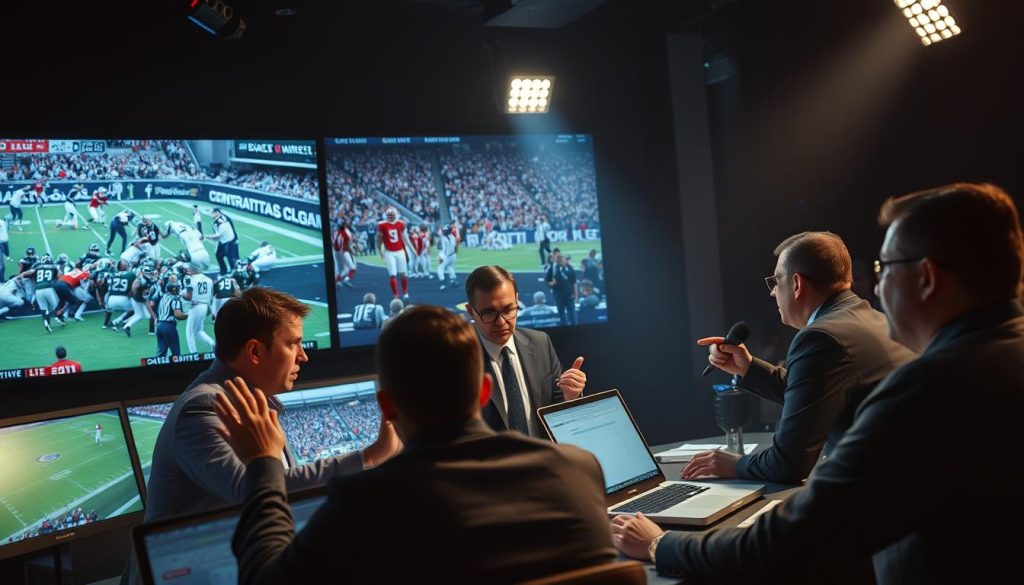
When the Stream Breaks: Case Studies in Digital Heartbreak
The 2006 FIFA World Cup final became the Napster of sports piracy. 500,000 viewers flocked to unauthorized streams. But the real wake-up call came in 2007 when the NFL Network’s infrastructure crumbled during a Patriots-Giants game. Fans turned to Chinese SOP relays faster than Tom Brady spots an open receiver.
These disasters exposed a brutal truth: every buffering wheel is an engraved invitation to piracy. Guerrilla streamers didn’t outsmart media giants – they simply showed up where corporate broadcasters failed to deliver. Today’s self-healing networks act like digital bouncers, using predictive algorithms to patch vulnerabilities before viewers even notice.
Modern platforms learned from these early fumbles. Adaptive bitrate streaming now adjusts like a quarterback reading blitzes, while edge computing positions content closer to audiences than a cornerback on press coverage. The question remains: will these upgrades withstand the next ”digital blackout” moment when millions simultaneously demand flawless HD?
Event Planners and Venue Managers: Risk Management and Best Practices
Imagine 80,000 fans all taking Instagram photos at once, drinking $18 craft beers. The real hero isn’t the quarterback; it’s the event internet infrastructure that keeps everything running smoothly. Today’s venues are more than just buildings; they’re complex systems where internet and entertainment meet.
We visited a Starlink-powered stadium that’s a marvel of modern tech. It uses satellite arrays to handle huge amounts of data, outdoing ancient Rome’s record-keeping. At the same time, Comcast’s green data centers show you can stream and protect the environment without harming it.
Wiring the Colosseum: Modern Infrastructure Demands
Today, we need three things from our internet: it must be fast, reliable, and not drive us crazy. AI helps manage data flow, giving priority to important tasks and limiting the bandwidth of others. This means fewer problems when you’re trying to buy tickets or make payments.
Here’s a tip: manage your network like a busy concession stand. Focus on apps that matter most, like selling drinks, and slow down others. This way, you avoid the frustration of a slow system when tickets go on sale.
Tech Partnerships and Innovations in Streaming Sports
Imagine Tom Brady throwing to a robotic Rob Gronkowski. That’s what Comcast did with DriveNets’ software and generic hardware. It’s a game-changing move in live event streaming.
The world of streaming sports now thrives on unlikely alliances. Telecom giants and satellite startups are teaming up like sports rivals.

Elon Musk’s Starlink satellites are now like the bat boys of baseball. They beam 4K footage from minor league games. Virtualized network cores are making production trucks smarter.
These partnerships are not just changing the game. They’re reinventing the stadium.
The Comcast/DriveNets partnership shows you don’t need special hardware for top-notch infrastructure. They’ve made a scalable solution that outshines traditional setups. Starlink’s media apps turn remote Little League fields into TV-ready venues. Every pop fly gets its moment in the spotlight.
Strange Bedfellows: When Telcos Meet Tactical Cams
Emergency Response: Keeping the Show Online
When Mother Nature crashes your live event, event internet infrastructure saves the day. Imagine hurricane winds, cameras rolling, and 50,000 fans waiting with bated breath. Who keeps the digital show running?
Disaster Plays: When Tech Meets Tornadoes
Comcast’s self-healing networks work like a chess master. They use AI to quickly reroute data, faster than Taylor Swift changes her style. It’s like digital triage, keeping emergency communications first while other data waits patiently.
Starlink Mini’s satellite kits are changing disaster response. They deliver broadband quickly, even when local networks fail. This means broadcast teams can keep sending footage, even when everything else is down.
These solutions don’t just react; they predict. They analyze weather patterns to strengthen networks before disaster hits. In the game of connectivity, being proactive is the best defense.
The Augmented Arena: Where Sports Fandom Gets a Software Update
Your grandfather’s sports bar now offers smooth AR and craft IPAs. Comcast’s 5G networks could soon stream esports broadcasting like the Super Bowl. Starlink’s orbital rig might show Everest ice climbers in 16K resolution on your VR headset. The $81.95 billion sports tech revolution is already here, in 360 degrees.
Holographic Draft Picks and Virtual Victory Laps
Tomorrow’s armchair quarterbacks will analyze plays with Microsoft HoloLens. They’ll see real-time stats and biomechanical data. Imagine rewinding Patrick Mahomes’ impossible throw with X-ray vision.
Fantasy leagues could turn into holographic war rooms. Your virtual Lamar Jackson might debate play calls with AI Belichick.
Stadiums are becoming mixed reality stages. Comcast’s 5G infrastructure tests suggest we’ll see augmented first-down lines soon. Starlink’s satellites enable VR climbers to share El Capitan ascents in real time.
The line between athlete and avatar blurs with Nike’s motion-capture suits. They turn your Sunday catch into Steph Curry’s training data.
This isn’t just about sharper pixels. It’s about communal storytelling reimagined. Virtual watch parties let Tokyo fans high-five Clevelanders in shared holographic space.
When the tech works, we forget it’s there. But when it stumbles, we feel digital heartbreak. One question remains: will augmented reality make us better fans, or just turn sports into another subscription service?



