Welcome to 2024, where climate change has become a major global issue. It’s like a bad game of Monopoly, where one side keeps getting all the properties.
In central Mali, farmers are fighting over water. The UN says climate disasters force over 20 million people to move every year. That’s like moving New York State every year.
Countries most at risk of climate damage are also hotspots for political tension. Yemen, Mali, Afghanistan – adding fuel to a fire and then being surprised when it bursts into flames.
Our planet’s natural resources are unevenly distributed, like a rigged game. This environmental crisis is already happening, disguised as political instability.
Human Rights on the Brink: Case Studies from Africa, Middle East, and Sports Arenas
Remember when human rights violations were hidden? Now, they’re happening openly during ‘natural’ disasters that aren’t natural.
Libya’s Storm Daniel showed us how climate change can cause suffering. The dams failed, killing thousands. Climate change was the trigger, but human mistakes made it worse.
Azerbaijan used force to stop environmental protests. Security officers hurt water protectors, showing some governments think might is right. Even when water is poisoning people.
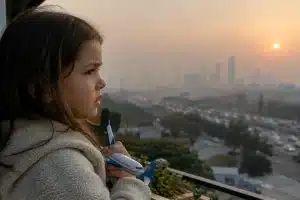
Canada was busy too, with wildfires that covered a huge area. The smoke signals showed climate chaos knows no borders. Air quality alerts became a warning for all.
The Rohingya faced tragedy with Cyclone Mocha. Confined in open-air prisons, their homes and hopes were lost. Children lost healthcare, education, and sanitation in one go.
Honduras made defending the environment deadly. 131 killings in a decade show the value of human rights when money is involved. A family killed for opposing a polluting mine? That’s a statement.
The United States was a climate hypocrite. It became the world’s largest LNG exporter and plastics producer while talking about saving the environment. It’s like selling cigarettes at a cancer event.
These conflict zones are not just battlefields. They’re where we fail our most vulnerable. When fighting for water becomes deadly, we’ve lost the plot on human rights protections.
The link is clear: climate change is erasing basic rights in conflict zones worldwide. The idea of a safe space is disappearing fast, like Arctic ice.
The Weaponization of Nature: Water, Minerals, and Energy
Welcome to the 21st century’s twisted game of geopolitical chess. Nature has become the ultimate weapon. Forget nuclear options – the real power plays are with aquifers and mineral deposits. It’s like we’ve decided Game of Thrones was too subtle for our taste in resource conflicts.
Water isn’t just life-giving anymore; it’s political leverage on tap. Transboundary water supplies have become the new nuclear footballs. Countries hold river basins hostage like they’re playing the world’s most dangerous game of keep-away. When the taps run dry, so does diplomacy.

Jordan offers a rare glimmer of hope in this parched landscape. Their Water Sector Efficiency Project benefits Syrian refugees. This concept is so revolutionary it’s like finding an oasis in the desert. But let’s be real: one efficient water project against global water stress is like bringing a water pistol to a forest fire.
The Sahel region’s Great Green Wall initiative aims to restore 100 million hectares by 2030. It’s the most heroic and desperately inadequate environmental project. The ambition is breathtaking; the timeline is breath-taking in a completely different way.
Minerals have become conflict currencies in places like the DRC conflict. Cobalt and coltan fund violence while powering our smartphones. It’s the ultimate irony: our connected world depends on disconnecting communities from their land and safety. The resulting forced migration patterns look like climate-induced domino effects – each falling piece triggering the next crisis.
Western companies aren’t just bystanders in this resource war. Canadian mining operations in Mongolia’s Gobi region pollute nomadic herders’ lands. Corporate headquarters lecture about sustainability back home. It’s environmental colonialism dressed up as progress – like putting a green ribbon on a bulldozer.
The United States’ role in this mess is significant. We’ve become the world’s largest LNG exporter and plastics producer. Factories are strategically placed in minority communities. Environmental racism is a growth industry in 2024. We’re playing chess with natural resources, except the board is on fire and all the pieces are poisoned.
The weaponization of nature isn’t some future dystopia – it’s our current reality. Water wars, mineral conflicts, and energy domination are reshaping global power dynamics. They create patterns of forced migration that would make historical empires blush. The DRC conflict shows us exactly what happens when resources become weapons: everyone loses except those holding the triggers.
International Response: UN, NGOs, and the Role of Celebrity Athletes
If the world’s response to environmental crises were a football game, we’d be down 5-0 at halftime. The UN wants $500 billion a year for SDGs, but that’s a big ask. The US spent over $2 trillion on the Afghanistan war, which is more than the proposed climate funding for four years.
The promise of $100 billion from developed nations in 2009 is now a joke. In 2021, they managed $89 billion. Russia spent $211 billion on its Ukraine war that year. Our priorities are not what they should be.
On the front lines, early warning systems in Afghanistan try to prevent drought disasters. The Central Asia Flood Early Warning System is a real-life example of humanitarian response that saves lives. It’s like teaching someone to read weather patterns instead of just giving them a fish.
Amnesty International says polluters should pay. This idea makes corporate boardrooms nervous. There’s legal backing for this, as shown in this analysis of humanitarian justice frameworks. But getting it through a shareholders meeting is tough.
Celebrity athletes are unexpectedly helping with climate advocacy. When a famous footballer talks about water scarcity, people listen. Their platforms reach more people than UN reports ever could.
NGOs are trying to fix a sinking ship while governments argue. The current humanitarian response is not enough. It’s like using a band-aid on a bullet wound.
Celebrity involvement brings attention, but it’s the UN and NGOs that do the real work. Their humanitarian response efforts often go unnoticed until disaster strikes. Then, everyone wonders why we weren’t better prepared.
Our global humanitarian response system needs more than just star power. It needs funding, coordination, and the will to treat climate disasters seriously. Until then, we’re just rearranging deck chairs on the Titanic – with a famous athlete occasionally tweeting about the iceberg.
Women, Children, and the Double Burden of Crisis
If climate change were a nightclub, women and children would face the highest costs. They deal with the worst effects of climate change and are expected to fix problems they didn’t cause. This is called the “double burden,” says Mary Izobo, an international human rights lawyer.
In Somalia, changing rain patterns lead to disasters. Water shortages cause clan fights, which result in honor killings of women. Early marriages increase as families see daughters as a safety net.

Women who go for water face more sexual violence and miss out on education. They’re caught in a trap: doing their survival duties while risking their safety.
But there’s a hopeful turn in Yemen. UN efforts to include women in water management have lowered tensions between groups. This shows that involving those most affected can lead to better solutions.
In Africa, women lead in climate-smart farming and renewable energy. Yet, they face more gender-based violence when displaced. They’re tackling climate issues while facing security risks.
The link between gender and climate isn’t just a side note. It’s central to both the problem and the solution. Women are not just victims; they’re innovators, managers, and peacebuilders, working under tough conditions.
| Region | Climate Impact | Gender-Specific Consequence | Women-Led Solution |
|---|---|---|---|
| Somalia | Water scarcity | Increased honor killings, early marriage | Water collection cooperatives |
| Yemen | Resource conflicts | Exclusion from decision-making | Women in water management |
| Sub-Saharan Africa | Agricultural disruption | Increased GBV during displacement | Climate-smart farming initiatives |
| Conflict zones | Energy poverty | Health risks from fuel collection | Renewable energy micro-projects |
This isn’t about giving women special treatment. It’s about recognizing that solving climate problems requires understanding how gender and climate intersect. Women face environmental crises differently, leading to unique solutions.
Where women lead in resource management, communities see less conflict and more sustainability. It’s time to see gender and climate as interconnected, not separate issues.
From Hackathon to Football Pitch: Innovative Solutions in Sports for Peace
Who would’ve thought that sports fields could help make peace? While diplomats work on peace plans, athletes use sports to bring people together. Basketball courts and soccer fields become places for talks and learning.
The sports for peace movement is more than just a dream. It’s about building communities through sports. In places with little water, teams play football together. Then, they work on solving water problems.
Now, tech hackathons are tackling old conflicts with new ideas. Developers make apps for mapping resources and warning systems for droughts. It’s like using technology to wrestle with ancient problems.
Celebrity athletes are now peace ambassadors. They use their fame for causes like climate change and rebuilding communities. Their influence can open doors that diplomacy can’t.
These efforts show that deep conversations can happen on the field, not just in meetings. Young people in tough places learn through sports. They get education and build community together.
It’s also important to hold these efforts accountable. Groups are working to stop abuses in sports while supporting positive ones. This ensures programs are doing good work.
The game of football becomes even more meaningful when it helps communities. Every move on the field is a step toward peace. It’s not just about winning—it’s about ending conflicts, one game at a time.
Lessons and Solutions: Building Equitable Resource Governance
The world is in trouble, but we have a plan. Equitable resource governance is key to survival. Women are not just watching; they are leading the way.
Mary Izobo showed us that putting women at the center of climate adaptation works. We need more women in climate governance roles. We also need funds for projects led by women and education that teaches sustainable skills.
The UN Secretary-General is tackling a big problem: a financial system that’s unfair. Debt is holding countries back. We need financing that’s affordable for the long term.
Places like Afghanistan and Jordan are showing us the way. They have early warning systems and inclusive water projects. The solutions are real, but do we have the courage to choose them?
2024 could be a turning point. It could be our last chance. The choice is ours. Let’s make it count.