Remember when “nuclear” meant mushroom clouds and power plants? The International Atomic Energy Agency has been quietly rewriting that script for decades.
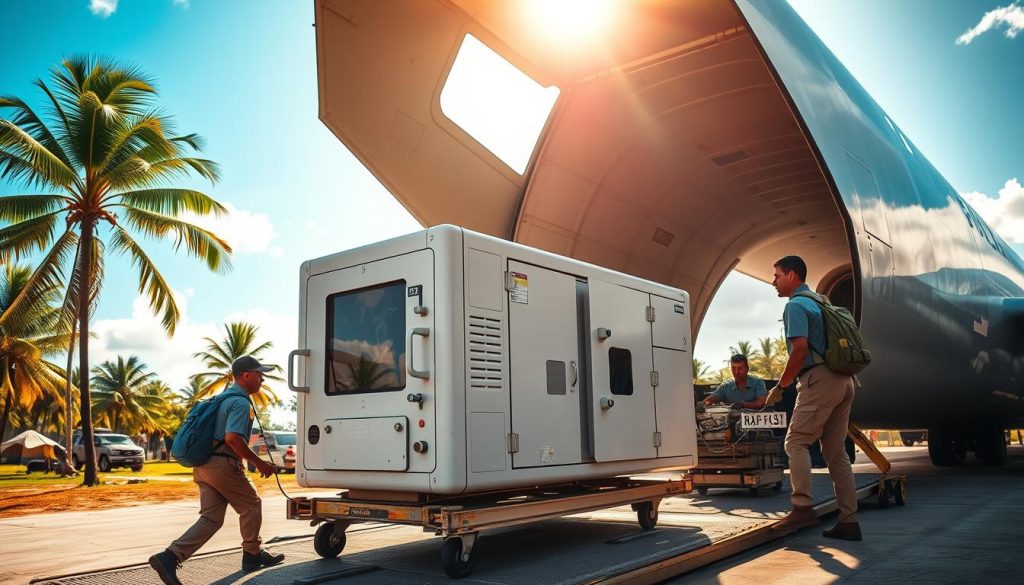
Their latest move? Shipping X-ray units to Haiti. This isn’t just equipment donation – it’s building sustainable healthcare where it’s needed most.
I’ve watched how peaceful atomic applications create real impact. From cancer diagnosis to malnutrition treatment, it’s like watching Q from James Bond switch to humanitarian tech missions.
Jamaica’s nuclear medicine centers already show what’s possible. Now Haiti gets its moment. This is science for good at its finest – transforming medical care in places where advanced technology often arrives last.
Sports Tech Saves: Medical Breakthroughs for Teams and Events
The same technology used in healthcare is now changing sports medicine. It’s like a ‘radioactive glow-up’ but without the real radioactivity.
What was once used for cancer diagnosis is now in sports. Teams use these tools to reduce errors and improve accuracy. This means less radiation and better results.
Sports medicine has changed a lot. The IAEA innovation in healthcare has brought new technology to sports. Now, athletic facilities have tools that make old X-rays seem outdated.
| Feature | Traditional Sports Medicine | Nuclear-Enhanced Approach | Impact on Athletes |
|---|---|---|---|
| Injury Detection | Basic imaging, often missed micro-fractures | Precision radiation diagnostics | Earlier intervention, faster recovery |
| Radiation Exposure | Higher risk of overexposure | Reduced treatment errors | Long-term health protection |
| RecoTime | Weeks to months for complex injuries | Accelerated healing timelines | More playing time, fewer career endings |
| Performance Data | Limited biomechanical analysis | Comprehensive physiological mapping | Peak performance optimization |
We’re seeing fewer injuries that end athletes’ careers. Athletes are reaching their best with advanced technology. It’s like something out of a Tony Stark movie.
This IAEA innovation is more than new tools. It’s a new way to protect athletes and help them perform better. The future of sports medicine is here, and it’s powered by nuclear technology.
Building Collaborative Projects: Engineers, Doctors, and Coaches
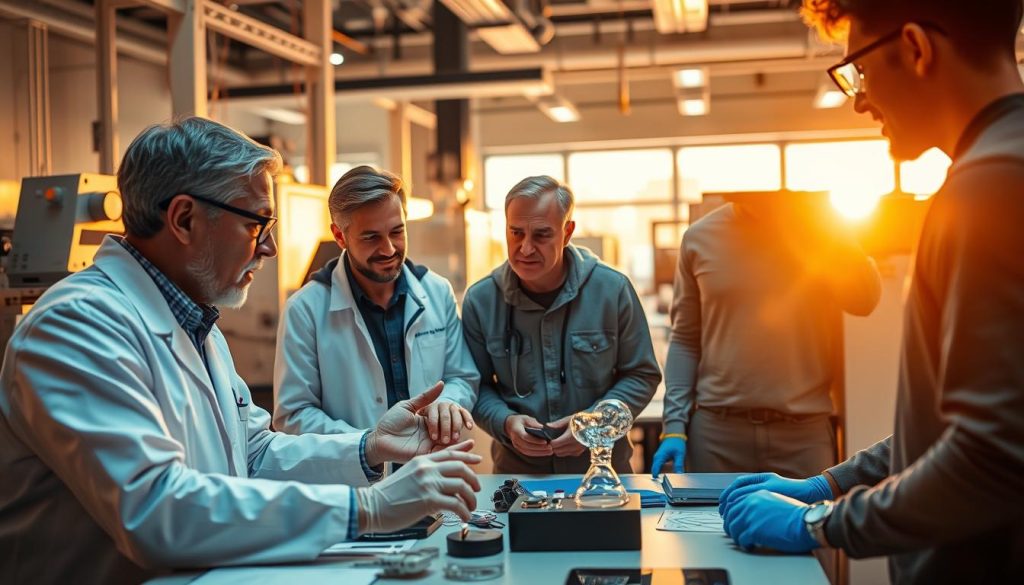
Seeing experts from different fields work together is like watching the Avengers team up. Instead of fighting aliens, they tackle ignorance and inefficiency. It’s magical when engineers, doctors, and coaches communicate clearly.
The Trinity of Innovation: When Different Worlds Collide
I’ve seen these collaborations firsthand, and they’re truly beautiful. Engineers bring precision, doctors apply it practically, and coaches push for real results.
Innovation grows when we break down barriers. Experts from different fields share their best ideas. This leads to solutions that work in the real world.
Take Jamaica’s approach to interdisciplinary projects. They combined:
- Water Resources Authority (technical expertise)
- National Environment and Planning Agency (regulatory oversight)
- University of the West Indies (research capabilities)
This team created sustainable solutions that no single entity could achieve alone. It’s a prime example of science for good in action.
Case Study: Jamaica’s Nuclear Medicine Success
Jamaica’s nuclear medicine center was a team effort. It needed regulators, scientists, medical professionals, and international partners working together.
The Hazardous Substances Regulatory Authority shows how technical cooperation programs bridge gaps. It’s like a symphony where everyone plays their part perfectly.
Here’s what made their collaboration successful:
| Stakeholder | Role | Contribution | Impact |
|---|---|---|---|
| Medical Professionals | Clinical Application | Patient care protocols | Treatment efficacy |
| Engineers | Technical Implementation | Equipment integration | System reliability |
| Regulatory Bodies | Safety Oversight | Compliance frameworks | Public trust |
| International Partners | Knowledge Transfer | Global best practices | Cutting-edge solutions |
This model shows how humanitarian tech projects succeed with diverse expertise. The Jamaican approach didn’t just create a medical facility. It built an ecosystem for innovation to thrive.
The key to progress is sharing knowledge. When engineers, doctors, and coaches communicate, everyone benefits.
Training, Injury Detection, and Performance Monitoring
Most athletes use smartwatches and apps to track their performance. But, the real magic happens in labs with cutting-edge tech. It’s so advanced, it makes your Apple Watch seem old-fashioned.
The blend of nuclear science and sports is not just about finding injuries. It’s about stopping them before they start. Imagine knowing when a muscle might fail or predicting stress fractures early.
The Science Behind Athletic Excellence
Sports medicine has come a long way from ice packs and aspirin. Today, it’s all about data so detailed, it’s almost like NASA’s.
We’re not just tracking heart rates and steps anymore. The real magic is in combining medical imaging with performance analytics. It’s like having X-ray vision for athletic talent.
No, athletes aren’t turning into glow sticks. The IAEA innovation in sports medicine uses safe, controlled nuclear techniques. It’s so advanced, even Tony Stark would be impressed.
These technologies include:
- Bone density scanning that predicts fracture risks months in advance
- Metabolic tracking that optimizes nutrition down to the molecular level
- Muscle fatigue analysis that prevents overtraining injuries
The radiation protection used in healthcare ensures athlete safety during these advanced tests. It’s like having a nuclear physicist in every training room—without the need for suits.
This sports medicine revolution isn’t just about fancy gear. It’s about making complex science practical for athletes. Coaches and medical staff can use this tech to improve performance.
Think about it: we’ve moved from guessing injuries to predicting them with nuclear precision. That’s not just innovation—it’s changing the game.
Global Lessons from Science-Driven Health Initiatives
Imagine your grandma’s secret recipe is a hit in fancy restaurants and family gatherings. The tech that saves lives in poor areas is now helping top athletes perform better. Who knew nuclear medicine could be so versatile?
From Developing Nations to World-Class Athletics
I’ve seen how tech moves from one field to another. Portable X-rays used in poor areas are now used to check athletes for injuries. It’s amazing how tech can adapt like that.
Canada shows us how working together can lead to great results. Their focus on women’s rights and the environment proves that using science for good is smart, not just kind.
It’s clear: tech meant for emergencies often becomes a game-changer in sports. It’s a surprising twist in how health tech evolves.
The Ripple Effect of Technological Transfer
This isn’t just about using old tech in new ways. It’s about ideas crossing borders and fields. The same tech that predicts disease outbreaks can also predict sports injuries.
Tools made for emergencies are now used by Olympic teams. Emergency plans help sports medicine too. The impact is huge once you look closely.

| Humanitarian Origin | Sports Application | Impact Level |
|---|---|---|
| Portable diagnostic imaging | Field-side injury assessment | Game-changing |
| Remote monitoring systems | Athlete performance tracking | Revolutionary |
| Emergency response protocols | Sports medicine best practices | Life-saving |
| Data analytics for public health | Performance prediction models | Transformative |
The table shows that innovation knows no bounds. Tech from humanitarian tech and elite sports can come together. It proves that science for good helps everyone, from patients to athletes.
Leveraging Sport as a Platform for Science Advocacy
Who would’ve thought a hockey rink could become a diplomatic stage for nuclear tech? Canada is turning Olympic venues into science hubs. It’s like finding out your favorite athlete has a PhD in particle physics.
Sports make complex science easy to understand. When athletes support IAEA innovation, nuclear medicine becomes cool. It’s almost as exciting as a game-winning goal.
When Athletics Meets Activism
Star athletes are now science ambassadors. They score diplomatic wins, not just points. Their support carries more weight than any government statement.
A sprinter talking about radiation therapy gets more attention than a scientist. It’s a mix of Sports Center and Nova.
The Diplomacy of Sports Science
Canada’s strategy turns international tournaments into negotiation tables. They build alliances through sports and promote sports medicine advancements. It’s a unique way to use soft power.
This method contrasts with authoritarian models. Democratic nations show off transparent scientific cooperation through sports. Everyone benefits, both on the field and in the lab.
The real genius is making nuclear safety as thrilling as overtime. When science uses sports’ platform, everyone listens to what was once just conference-room talk.
Future Outlook: Safer, Healthier Athletes Worldwide
So, where are we headed? I’ve seen these trends grow, and it’s looking good. It’s like the tech is actually making our lives better.
The Next Frontier in Sports Technology
Soon, athletes everywhere will have the same tools. This is thanks to advanced uses of nuclear tech in sports medicine. It’s not just about making athletes better. It’s about making sports safer and more available to all.
Global Standards and Ethical Considerations
Just like we’re working together on climate change and security, we’re doing the same in sports. We’re creating rules that make science a level playing field. Every field becomes a place to explore human limits.
This tech is all about using science for good. The IAEA’s work in sports medicine is amazing. It shows us a future where everyone is healthier and happier.