Around the world, cities and recycling facilities are increasingly turning to artificial intelligence to transform how waste is processed — and not just to clean up the planet. Innovative AI systems are now uncovering valuable commodities hidden in everyday trash, making recycling more efficient, profitable, and environmentally smart than ever before.
Rethinking an Old Problem with New Tech
Traditional garbage sorting has long relied on slow, labor-intensive manual work or outdated mechanical processes. But those approaches struggle to keep pace with mounting waste streams and rising expectations for sustainability. In the United States alone, a large portion of recyclable materials still never makes it out of landfills, despite decades of curbside programs.
Enter AI-driven systems equipped with machine learning, computer vision, and sensor technology. These tools can analyze materials on fast-moving conveyor belts, classify every item by type, and direct each piece to its optimal recycling stream — often far more accurately and quickly than humans can.
How AI Finds Value Hidden in Waste
AI-powered recycling robots and sorters — such as those developed by companies like Greyparrot, AMP Robotics, and start-ups like Smarter Sorting — use advanced imaging and pattern recognition to identify plastics, metals, paper, electronics, and other commodities within mixed waste. The systems are trained on thousands of images, helping them distinguish items even when they’re crumpled, soiled, or broken.
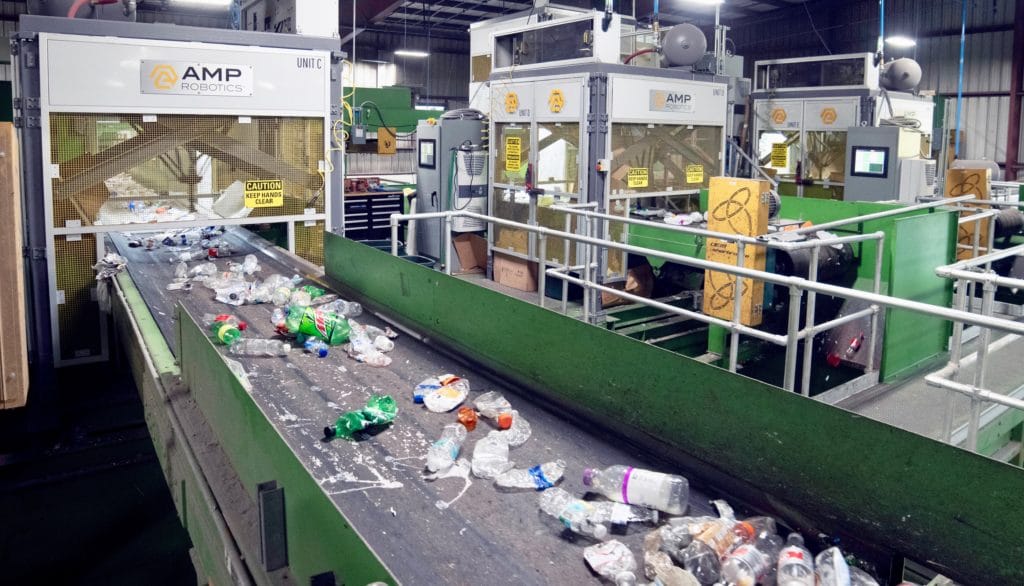
Once identified, powerful pneumatic air jets or robotic arms direct each object into its appropriate stream. This level of precision has been shown to boost recovery rates, reduce contamination, and produce “clean” bale outputs that fetch higher prices on resale markets.
As detailed in reporting by Abacus News, this shift toward AI-powered waste sorting reflects a broader push to turn environmental challenges into scalable economic opportunities.
A notable example of this trend is the adoption of automated sorting at facilities like Murphy Road Recycling near Hartford, Connecticut — where AI helps sort up to 60 tons of mixed recyclables per hour at high accuracy.
The Business Case for Smarter Sorting
For waste managers and municipalities, AI isn’t just about environmental responsibility — it’s becoming a sound economic strategy. Enhanced sorting improves the purity of recovered materials, making recycled plastics, aluminum, and paper more valuable to manufacturers. Cleaner material streams command better prices and reduce processing costs.
Some facilities are exploring biochar production — converting organic waste into a soil-enhancing carbon product — and even generating carbon credits in the process. This broadens revenue streams beyond traditional recycling markets.
Meanwhile, major waste management firms like Republic Services and Waste Management (WM) are investing billions to automate their operations, citing both financial returns and reduced reliance on hard-to-fill manual labor.
AI’s Role in a Circular Economy
Beyond economic gains, AI technology is central to the push toward a circular economy — a system where materials are reused, recycled, and repurposed rather than discarded. Studies show that AI-assisted waste sorting can significantly increase recycling rates, diverting materials from landfills and reducing harmful emissions.

AI systems are also being integrated into broader waste management strategies: smart bins equipped with sensors can guide users on proper disposal and alert collection teams when they’re full, while analytics platforms help cities optimize collection routes and plan new facilities based on real-time data patterns.
The combination of AI, data analysis, and automation is shifting waste management from a reactive service to a strategically optimized infrastructure that supports sustainable urban development.
Challenges and the Road Ahead
Despite impressive progress, challenges remain. Not all recyclable streams are easy for AI to sort — tiny fragments, mixed materials, and emerging complex products like electronics can confound systems without sufficient training data. The high initial costs of AI and robotics also pose adoption barriers for smaller facilities.
Still, as sensor and machine-learning technologies continue to improve, and as global policies increasingly favor material reuse over disposal, AI’s role in waste management is expected to grow. Industry experts say that AI will help close the loop on material use, reducing environmental impact while unlocking economic opportunities from resources once considered waste.