


What do Athenian olive wreaths and Green Bay’s cheeseheads have in common? Both are tribal tattoos – permanent markers of belonging that outlast empires. Long before hashtags and hashtivism, humans carved their cultural identity into wrestling pits and cricket pitches. The Ancient Greeks didn’t just race chariots at Olympia; they staged religious spectacles where Zeus got better billing than LeBron.
Fast-forward four millennia. The Māori Haka shakes rugby stadiums like Thor’s hammer, while Philadelphians smear midnight green on their faces like warriors preparing for battle. These rituals aren’t mere entertainment – they’re folk religion 2.0. When South Asia’s Kabaddi players chant ancient mantras mid-tackle or Brooklyn courts become melting pots for urban identity, we’re watching civilizations argue through athletic dialect.
Britain’s imperialists knew the game. They weaponized cricket to “civilize” colonies, only to have colonized nations swing back with sixer-powered community pride. Today’s stadiums are modern agoras – places where belonging gets decided through tailgate theology and jersey-colored tribalism. The real question? Whether our jockstraps and face paint make us more unified than the Greeks’ laurel crowns ever did.
Rituals, Religion, and the Growth of Local Sports
What do blood sacrifices and halftime shows have in common? More than you might think. Humans have made athletic events into sacred theater for ages. They’ve turned courts into Aztec temples or football fields in Texas.
We’ve moved from heart extraction ceremonies to mascot dances. But the urge to make dirt and grass sacred remains strong.
The Mesoamerican ballgame ullamaliztli was once a game where losers were sacrificed. Today, we have Friday night football under stadium lights. We consecrate spaces with touchdowns and tailgates.
Italy’s Offida Bove Finto festival is like a medieval carnival. It’s similar to the excitement of Super Bowl pre-shows.
But here’s something interesting: studies show today’s stadiums are bigger than cathedrals. The Champions League final gets 400 million viewers worldwide. That’s triple the number of people watching the Vatican’s Easter Mass.
Are we seeing a new civic religion rise? Or just updating old traditions for today’s fans?
Either way, the ritual continues. We sing fight songs like hymns, paint our faces like war priests, and see rival teams as enemies. The field is our altar, even with nacho cheese and foam fingers.
How Sporting Events Build Community Ties
Let’s get real: while 3.5 billion people watched the World Cup last year, your neighbor’s kid scoring a goal at Friday’s rec league game actually strengthens your town’s social fabric. Mega-events dazzle, but local matchups stitch relationships tighter than a well-laced cleat.
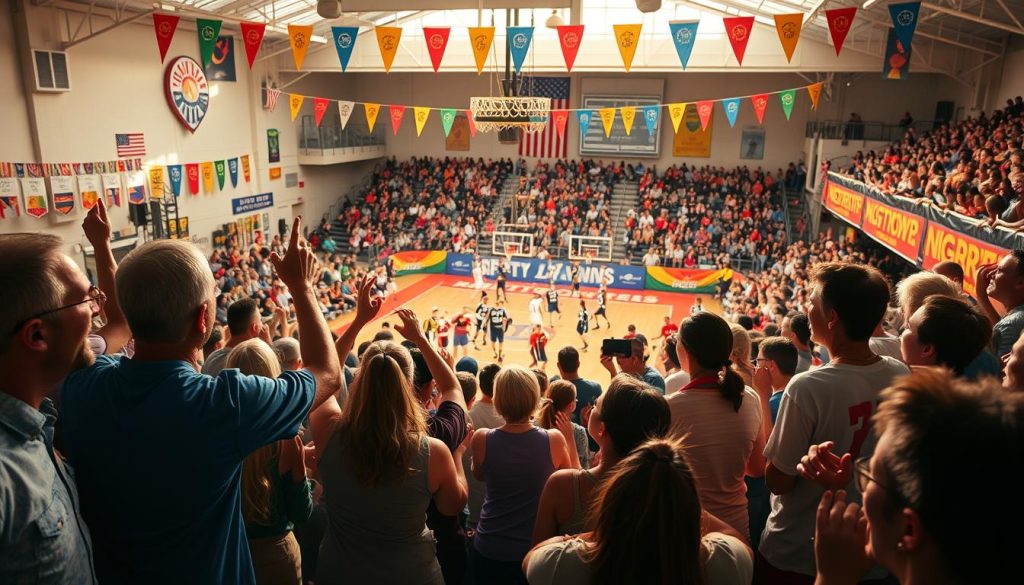
Think about Minneapolis’ frozen pond hockey culture. These pickup games—no tickets, no sponsors, just thermoses of cocoa—forge bonds that outlast any Olympic closing ceremony. Or Ecuadorian street soccer matches, where dusty pitches become town squares. These gatherings aren’t spectacles—they’re social infrastructure, creating trust metrics no billion-dollar stadium can replicate.
Even FIFA’s global circus pales next to Arctic Winter Games data showing 78% of participants maintain cross-cultural friendships years later. Why? Shared stakes. When your butcher coaches third base or your librarian referees, every play becomes personal. The World Cup unites strangers through screens; local leagues turn strangers into teammates.
So next time someone claims “bigger is better,” ask: does their event leave behind more than parking lot trash and hashtags? Spoiler alert—your town’s Friday night lights already answered.
Stories From Around the World: Sports, Culture, and Belonging
Imagine soccer as humanity’s most democratic cocktail party—a place where stadium roars and dusty alleyway cheers mix like gin and tonic. From Amsterdam’s military-grade fan choreography to Quito’s barefoot kickabouts, the beautiful game wears radically different jerseys. But both claim to bottle the same magic of unifying festivals.
Amsterdam’s Orange Tide vs Quito’s Barefoot Kickabouts
In the Netherlands, fandom is like a Taylor Swift Eras Tour rehearsal—precision chants, synchronized scarves, and stadiums that hum like Swiss watches. In Ecuador, pickup games unfold like jazz improvisations: no tickets, no turf, just raw rhythm. Which approach sparks deeper connection? Does structure strangle spontaneity—or give it a megaphone?
Brazil’s favelas offer a third answer. There, Várzea soccer transformed samba’s pulse into terrace anthems. It shows community identity isn’t built in boardrooms. It’s forged where cleats meet cracked concrete and chants drown out traffic noise. The real beautiful game isn’t about FIFA-approved grass length—it’s about who gets to define what “belonging” sounds like.
Measuring Social Impact: Outcomes for Youth and Residents
Let’s look beyond the cheers and confetti. While 113 million Super Bowl viewers watch, real changes happen off the field. It’s not just about who watched, but who was changed.

In Rochester, midnight basketball cut juvenile crime by 22% faster than new police. In Marseille, boxing gyms helped immigrants more than schools. These aren’t just stories; they’re data-driven uppercuts to old ideas.
Beyond the Scoreboard: Metrics That Matter
For every LeBron James, there are 10,000 kids learning from every missed shot. The OECD’s new framework shows what truly matters. It’s about sports that change lives, not just stats.
Why measure crowd noise when we can count confidence boosts? The goal is clear: youth engagement in sports builds unbreakable people, not just stars.
Actionable Insights for Organizations and Schools
How do you make money from tradition without losing its essence? It’s not easy. You have to balance keeping heritage alive with finding sponsors. This is like walking a tightrope, not just checking boxes for diversity.
The Navajo Nation’s basketball tournaments are a great example. They use tribal designs on jerseys and native languages in commentary. They also have profit-sharing models that keep decisions local. On the other hand, the NHL’s Vegas team was a disaster. It forgot its roots and became all about show, not substance.
The first rule is clear: authenticity scales, stereotypes crumble. Germany’s Bundesliga keeps fans in charge with its 50+1 rule. This stops billionaires from taking over. Australia’s Indigenous Games also show how to do it right. They let elders design everything, from logos to revenue streams.
To avoid losing tradition, ask who’s telling the story and who’s holding the megaphone. The answer will tell you if a partnership is genuine or just after your culture.
The Future: Preserving Traditions While Embracing Change
Imagine a holographic haka dancer appearing next to New Zealand’s All Blacks in an eSports game. This game is watched by 50 million people. At the same time, Boston Celtics fans debate if augmented reality can truly capture the sound of sneakers on the original parquet floor. We’re not just seeing sports change – we’re testing how traditions stay alive.
When Algorithms Meet Ancestral Chants
Blockchain ticketing for La Liga matches? AI umpires judging Senegalese laamb wrestling? It’s a confusing mix. eSports is expected to make $6.8 billion by 2030. But can digital stadiums ever feel as real as Quito’s barefoot street tournaments?
Tokyo 2020 showed tech can honor tradition, like with recycled medals. But keeping the community’s spirit alive needs more than just greenwashing.
The real challenge is in blending old and new. Picture VR tailgates where Amsterdam fans teach others their chants. Or youth leagues using FIFA’s green metrics to fix up old courts through cultural preservation initiatives. It’s not tech giants rewriting the rules, but communities fighting to keep their traditions alive.
Traditions that don’t change become background noise on TikTok. But those that adapt? They’re writing the next chapter of human connection. Will your local sports events make it through the metaverse, or become exhibits for AI docents? The choice is yours.



