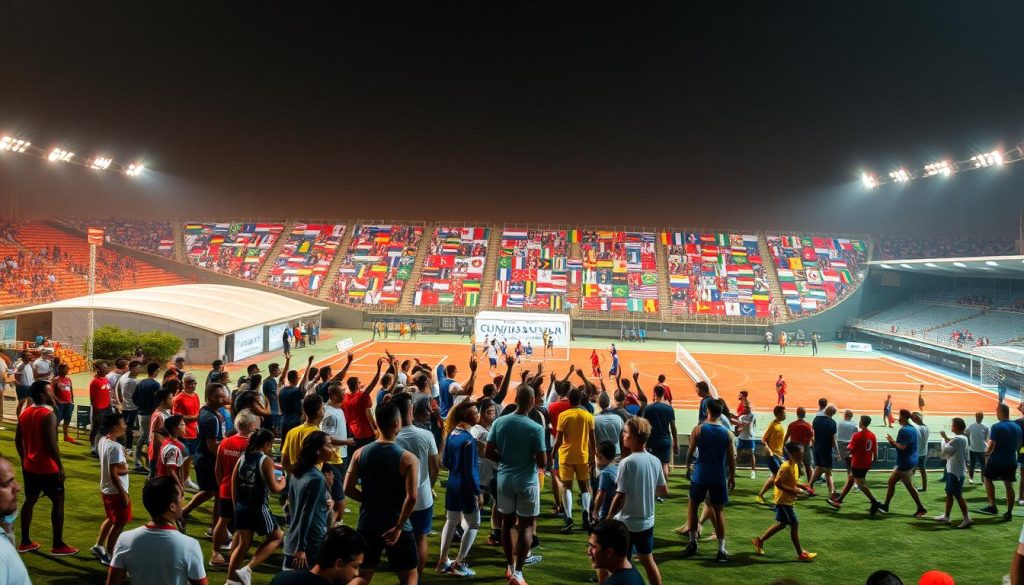
Imagine the Avengers coming together, but instead of superheroes, it’s bureaucrats with fairness metrics and inclusion quotas. That’s what happened when the International Olympic Committee introduced its 10-principle framework in 2021. This move didn’t just push for more athletic equality. It threw a cultural grenade into the old ways.
Now, let’s jump to Paris 2024. Here, gender parity is a big deal. For the first time, exactly 50% of athletes will be women. This is a huge change from the 2% female athletes at the 1900 Games. Canada is investing $25.3 million in inclusive programs, showing governments now see athletic access as critical.
But there’s more to these changes than just medals or feel-good moments. They’re changing how countries compete in more ways than one. When a soccer club’s value is more than a country’s GDP (like Real Madrid), sports become an economic battlefield. Policy is the secret weapon here.
So, what’s next? We’re entering a time where sports politics could mean real geopolitical strategy. From science-backed training to grassroots funding wars, the game is changing fast. Get ready – this isn’t your grandfather’s Olympic spirit anymore.
The Lisbon Treaty: Case Study for International Participation
Imagine diplomats trading briefcases for basketballs. The Lisbon Treaty’s sports clause shows how politics plays out in sports. It’s like “Game of Thrones” meets ESPN”, but with athletes in tracksuits.
The IOC consulted with over 250 athletes for two years. This effort was more intense than Taylor Swift’s “re-recording era”. Athletes from 46 countries fought for inclusion, like contestants on a reality show.
UN Human Rights experts got involved, turning debates into legal rules. Suddenly, jersey numbers became as important as constitutional changes.
This isn’t just about winning medals. It’s about changing global rules, one “friendly match” at a time. The real win? Showing bureaucrats can dribble diplomacy when the stakes are high.
Voices of Athletes and Teams in the Policy Process
Imagine LeBron James in a Senate suit, not in Space Jam. Today, athletes are rewriting rules, turning speeches into laws. They’re the new leaders in policy.
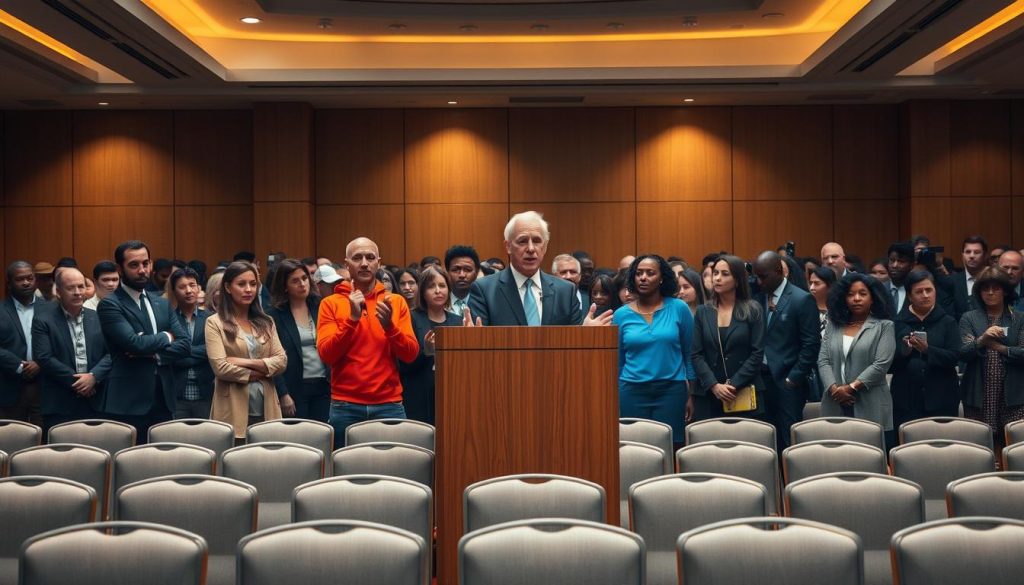
Trans weightlifters, once unknown, now lead in human rights. Their fight shows us how to count everyone equally. Canada’s support for 2SLGBTQI+ is like a Pride Night jersey swap, showing the power of sports diplomacy.
The IOC listens to athletes, showing a big gap in stats. Only 0.001% of Olympians are trans, but 1% of the population is. It’s like seeing one red jersey in a sea of white. Canada’s studies show female athletes were hit hard by the pandemic, leading to quick policy changes.
Why do we need lobbyists when athletes have wisdom? Today’s athletes are making laws, not just winning games. The question is, will old leaders give up power or mess up the handover?
Sports Federations and the New Diplomatic Landscape
Imagine a world where sports leaders have more power than diplomats. Welcome to the global sports policy world. Here, winning medals is as important as making deals. Locker rooms are where the real talks happen, not UN chambers.
Canada’s SSDIC program shows it’s not just about winning games. They’re using $12M to help heal through sports. The IOC wants 47% of sports leaders to be women, showing a big change.
Do you remember when the 1998 FIFA World Cup brought US and Iran closer? Today, sports diplomacy is different. The Arctic Winter Games are now key diplomatic events. And 44% female leaders in sports are changing how nations are seen.
This isn’t old-school diplomacy. Sport Canada and the IOC are mixing healing with politics. It’s a new way to build nations, as smooth as a slam dunk.
Navigating Cross-Border Competition and Rule Changes
Imagine if quantum physics wrote the rules for your fantasy football league. That’s what modern sports regulation is like. It’s a world where testosterone levels are as important as stats, and Canada’s Long-Term Development framework is more complex than Moneyball.
The IOC’s rules on hormone levels are causing more debates than LeBron’s legacy. It’s a big deal.
Sport Canada’s LTD model is more than just a playbook. It’s a complex game of international politics disguised as athlete development. The frameworks are so detailed, they’d make Billy Beane’s algorithms look simple.
Paris 2024 made a big change: 152 women’s events vs. 157 men’s. The gap between men and women is smaller than the rivalry between the Lakers and Celtics.
But here’s the real question: Are we measuring athleticism or playing BioShock with hormone charts? When policy changes are as impactful as a Mahomes deep ball, who comes out on top? The answer might be found at the intersection of science and sports, where the rules change as fast as Taylor Swift’s tour setlist.
Opportunities and Risks for Athletes and Managers
Imagine sports management as a mix of Risk and Moneyball. Athletes and managers face a world where Lisbon Treaty sports provisions meet grassroots activism. The pressure is as high as a World Cup penalty shootout.
Think like Billy Beane with numbers. Canada’s $14.3M for Indigenous sports is more than charity. It’s a smart investment in culture. The IOC’s $2.8M for gender equality also raises big questions. When does bodily autonomy become as valuable as a NIL deal? (Spoiler: It already is.)
Sport Canada’s anti-racism plan shows the real game-changer. Cultural safety is today’s training for success. But managing these efforts is tricky. How do you balance winning with global sports policy without making mistakes?
The risk is huge. Imagine Serena Williams serving while juggling torches. One wrong move and your DEI efforts can turn into PR disasters. But succeed, and you’re not just winning medals. You’re changing the game for the TikTok generation.
The Playbook for Tomorrow’s Global Sports Arena
Imagine making sports policy like picking a winning team. Instead of finding athletes, you balance gender and climate goals. Milano Cortina 2026 aims for 47% female athletes, a big leap from Salt Lake 2002.
This new strategy is not old-school. It’s a mix of Moneyball and the UN General Assembly. It’s all about making big changes.
The IOC’s Olympism365 plan is like Avengers: Endgame for policy. It brings together sustainability goals like Thanos gathering infinity stones. But Canada’s sport agreements are like Nick Fury, quietly building strong partnerships.
Future sports policy needs sharp metrics, like Steph Curry’s three-point shots. It’s about using blockchain and real-time data. Switzerland’s rainbow jerseys for Pride Month might have started a diplomatic trend.
The real challenge is combining policy with sports. Can IOC reforms and national agreements create something strong? The next era of sports policy will be shaped by activism and climate labs.
To stay ahead, treat policy drafts like March Madness brackets. Predicting upsets is hard, but navigating esports passport rules is even tougher. The game is on, and the clock is ticking.