Welcome to what feels like Earth’s permanent summer mode. Our planet just set a new record that nobody wanted to win.
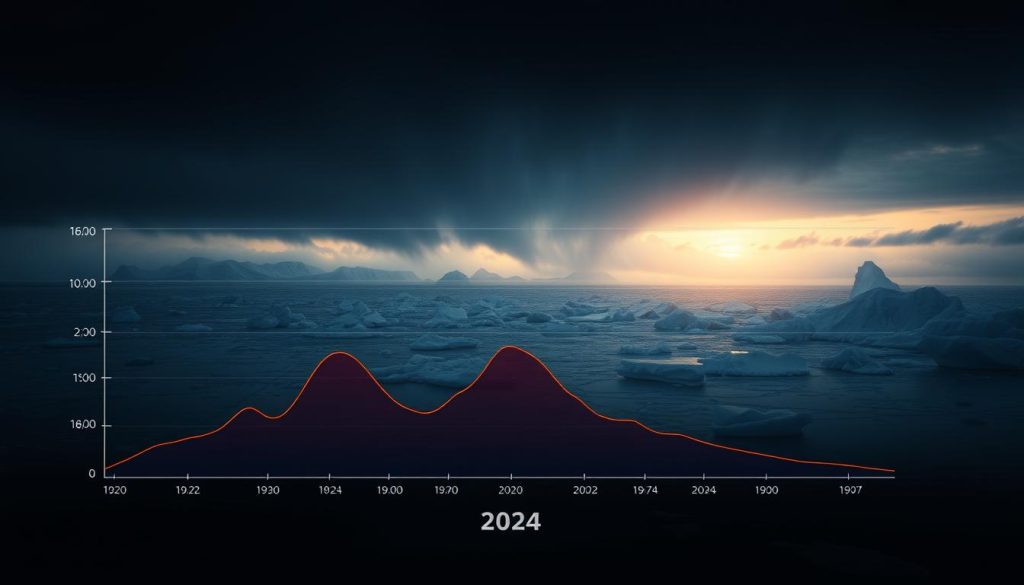
NOAA confirms 2024 officially became the warmest year on record, dating back to 1850. The global surface temperature rose 2.32°F above the 20th-century average. This is not just a record—it’s a shattering of records, like polar ice in July.
Here’s the uncomfortable truth: all ten warmest years have happened in the last decade. We’re not just seeing global warming—we’re living through a full-blown climate crisis.
Think of it as nature’s way of sending us urgent messages. The question isn’t whether we’ll respond, but whether we’ll pick up the phone.
This isn’t about doomscrolling through climate data. It’s about understanding we’re at a critical crossroads in human history. The choices we make now will decide if future generations inherit a habitable planet or a cautionary tale.
Key Environmental Issues Making Headlines This Year
If 2024’s environmental report card were a Netflix series, it would be a thrilling climate thriller. The planet is like a reality show with twists that would amaze M. Night Shyamalan.
Our oceans are now like thermal sponges, with record-high heat content. The top 2000 meters are storing heat like an attic in a heatwave.
Antarctica’s sea ice is doing a disappearing act, like Houdini. Its extent dropped to its second lowest on record, making glaciers look like ice cubes.
The tropical storm department surprised us this year. Global numbers were slightly below average, but the North Atlantic had 18 storms, way above average. It’s like weather patterns got their scripts mixed up.
These environmental trends are changing our daily lives. From altered hurricane seasons to shifting marine ecosystems, the changes are real and meaningful.
| Environmental Trend | 2024 Status | Historical Comparison | Potential Impact |
|---|---|---|---|
| Ocean Heat Content | Record High | Unprecedented levels | Marine ecosystem shifts, sea level rise |
| Antarctic Sea Ice | 2nd Lowest Recorded | Significant decline from averages | Global climate regulation affected |
| Global Tropical Storms | 85 (Below Average) | Slightly decreased frequency | Regional weather pattern changes |
| North Atlantic Storms | 18 (Above Average) | Unexpected increase | Coastal community vulnerability |
What makes these environmental trends stand out is their story. They’re not just numbers but connected chapters in our planet’s climate story.
The data shows Earth’s systems are reorganizing, not just warming. It’s a fundamental change, like a reboot, keeping climate scientists busy and us checking weather apps.
These environmental trends are both warnings and chances for action. They’re the planet’s way of confirming our climate agreements.
International Policy and Summits: Shaping Solutions
The Paris Agreement was meant to wake us up. But seven years later, we’re not taking action yet. It’s like the hero in a movie who’s about to get serious, but we’re stuck in the intro.
Let’s look at the numbers. The Agreement aims to keep global warming under 2°C. Sounds ambitious, but is it doable?
The UN Environment Programme says emissions have dropped by 13% from 2015. That’s progress, but it’s not enough. It’s like cleaning your room after being asked for months.
We need a 28% cut in emissions to meet the 2°C goal. Right now, we’re just bringing a reusable water bottle to a forest fire. The gap between what we promise and what we do is huge.
So, what happens at these fancy international summits?
- Photo opportunities outnumber real commitments
- Catering budgets might be bigger than climate funds
- We’re like a student who waited until the last minute to do homework
Sustainability needs more than just documents and speeches. It requires real policy changes that might hurt profits. That’s the hard part.
The real test is not making promises. It’s keeping them when money and environment clash. We’re waiting to see if nations will pass this test.
International climate policy feels like a group project where everyone promises to do their part but doesn’t. Someone’s probably eating all the snacks too.
How Sports Organizations Are Tackling Environmental Impact
Professional sports teams are now buying carbon offsets like they’re trading players. They’re moving from just making money to caring for the planet. Now, flying a private jet for games seems less appealing when you think about its carbon footprint.
Stadiums are at the forefront of environmental efforts. Many teams have gone carbon-neutral by using renewable energy and reducing waste. For example, the Philadelphia Eagles’ stadium is powered by solar energy, lighting every seat.

Athletes are becoming climate leaders. Serena Williams supports sustainable fashion, and Formula 1 drivers promote biofuels. It’s not just about looking good; it’s about using their influence for good.
League-wide green mandates are changing the game. Teams now compete on how green they are, just as much as on the field. Here’s how different leagues are doing:
| League | Carbon Reduction Goal | Key Initiative | Implementation Status |
|---|---|---|---|
| NBA | 50% by 2030 | Arena renewable energy | 12 teams converted |
| NFL | Neutral by 2028 | Zero-waste stadiums | 5 stadiums certified |
| MLB | 40% by 2026 | Sustainable merchandise | League-wide rollout |
| NHL | Carbon negative | Water conservation programs | All teams participating |
Some say these efforts are just a last-ditch attempt. But the change is real. When even the trash at the stadium is eco-friendly, it shows we’re moving in the right direction.
The link between sports and climate action is exciting. It shows that going green can be just as competitive as winning championships.
Sustainability Efforts in Schools, Businesses, and Homes
Remember when sustainability was all about granola and hemp sandals? Those days are over. Today, the eco-movement is everywhere, like a wildfire. And it’s about time.
Schools are now teaching kids about climate change. They learn about photosynthesis and carbon cycles, just like math. Some schools even use solar panels to teach physics. It’s a win-win for learning.
Businesses have found that going green can save money. They’re cutting their carbon footprint and making more money. Who knew saving energy could be profitable?
The IPCC’s plan is more than just words. It’s about reducing emissions and improving health and jobs. It’s a plan that benefits everyone and the planet. That’s a win-win.
Home sustainability has grown beyond recycling. Now, we have smart thermostats and solar panels. Even composting turns food scraps into fertilizer. Every choice helps reduce our carbon footprint.
Let’s look at the numbers. Here’s how different areas are doing in sustainability:
| Sector | Key Initiatives | Carbon Reduction Impact | Economic Benefits |
|---|---|---|---|
| Education | Green curricula, solar installations, waste programs | 15-25% reduction | Energy savings, grants |
| Corporate | Supply chain optimization, renewable energy, telecommuting | 30-50% reduction | Lower operational costs |
| Residential | Energy efficiency, solar panels, sustainable consumption | 20-40% reduction | Lower utility bills |
When these efforts come together, magic happens. Businesses help schools, homeowners use new tech, and everyone wins. It’s a cycle of sustainability.
Your carbon footprint is now something you can measure. It’s as easy to track as your bills. The change is coming, and it’s powered by technology and sustainability.
Regional Perspectives: How Urbanization Affects Climate
Urbanization has a strange role in our climate story. It’s both a problem and a solution. Cities absorb heat and release greenhouse gases, but they also offer a chance for sustainable living through density and innovation.
In 2024, most land surfaces saw temperatures above average. The Arctic, northeastern North America, and eastern Europe warmed up a lot. North America, South America, Europe, Africa, and Oceania all had their warmest years.
Urban heat islands show how cities get hotter than rural areas. This makes air conditioning use go up, leading to more energy use and emissions.
Different regions face unique challenges based on their urbanization patterns:
| Region | Urbanization Impact | 2024 Temperature Anomaly | Key Challenges |
|---|---|---|---|
| North America | Sprawling suburbs increase transportation emissions | +2.3°F | Car dependency, energy-intensive buildings |
| Europe | Denser cities but aging infrastructure | +2.1°F | Heat waves, energy retrofitting needs |
| Asia | Rapid urbanization pace | +1.9°F | Air quality, water management |
| Africa | Growing cities with limited resources | +2.0°F | Adaptation capacity, green space access |
Climate impact varies greatly by region. Wealthier cities can invest in green solutions. But, developing cities face extreme weather and lack basic services.
Some cities are using smart solutions. They’re using green roofs, expanding public transit, and building energy-efficient buildings. This density can also lead to more walking, biking, and sharing resources.
Regional approaches need to fit local conditions. What works in Portland might not work in Phoenix. Solutions must consider culture and geography to succeed.
Our cities are at a turning point. They can either worsen the climate problem or lead to solutions. It depends on leadership, innovation, and seeing urban planning as climate policy.
Environmental Activism: The Role of Youth, Athletes, and Influencers
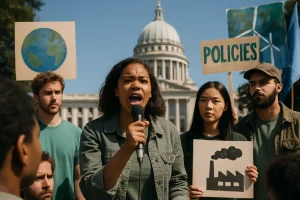
Remember when activism meant marching with signs and shouting through megaphones? Those days are over. Today, environmental activism happens on TikTok and Instagram. Gen Z shares climate facts with viral trends, and it’s working better than any protest sign.
About 3.3 to 3.6 billion people live in areas very vulnerable to climate change. But now, the most vulnerable are telling their stories. They’re becoming the leaders of the movement. Vulnerability varies, but everyone has a voice now.
Youth activists aren’t waiting for permission to act. They use digital platforms to organize and educate. They know how to reach people better than many marketing agencies.
Athletes are now using their fame for environmental causes. When they talk about sustainability, their fans listen. This athlete activism reaches people that traditional messages often miss.
Social media influencers have found that saving the planet gets more attention than ads. They make complex environmental issues easy to understand. This approach is both educational and entertaining, and it’s working.
| Activist Group | Primary Platform | Key Strengths | Impact Measurement |
|---|---|---|---|
| Youth Activists | TikTok/Instagram | Viral content creation | Policy changes, awareness spikes |
| Athlete Advocates | Twitter/ESPN | Mainstream reach | Brand partnerships shifting |
| Influencer Educators | YouTube/Instagram | Complex topic simplification | Engagement metrics, donations |
| Vulnerable Communities | Multiple platforms | Authentic storytelling | Policy attention, funding |
The real power shift is who’s listening. When those most affected by climate change share their stories, the conversation changes. This isn’t charity; it’s justice work, happening online.
This new era of digital activism shows that change can come through unexpected ways. Sometimes, it’s a tweet, a viral challenge, or an athlete speaking out. The revolution will be televised, but also on TikTok, Instagram, and Twitter.
Tech and Innovation: Solutions Shaping the Next Decade
The renewable energy revolution is here, bringing tech that’s better than your latest smartphone. Solar panels are so efficient, they can power your home and help you worry less about climate change.
Wind turbines have grown from simple windmills to engineering wonders. Offshore wind farms are now reliable power sources, like your morning coffee.
Carbon capture is like an atmospheric vacuum cleaner we wish we’d invented. It turns pollution into something useful. It’s like giving Earth a giant air purifier, because we’ve treated it like a dirty frat house.
But amazing tech doesn’t solve all our problems. We need emissions to drop 45% by 2030 to meet the 1.5°C target. That’s like trying to lose holiday weight by New Year’s Eve – it’s very ambitious.
The real challenge isn’t in the lab anymore. It’s scaling these solutions faster than a viral TikTok dance. We need to make renewable energy tech a global infrastructure before Miami becomes the new Venice.
Smart grids, energy storage, and next-gen renewable energy systems are advancing quickly. The question is whether we can deploy them at the scale our planet needs.
This decade is different because of AI, big data, and materials science. We’re not just improving renewable energy – we’re reinventing power generation, storage, and distribution.
The innovation pipeline is full of promise, but promise doesn’t cool temperatures. Implementation does. The next ten years will show if our tech brilliance is humanity’s greatest achievement or failure.
What Can Individuals Do: Everyday Actions with Big Results
Ever feel like your eco-choices are just drops in an overheating ocean? Think again. Your daily routines pack more punch than a Greta Thunberg speech at a fossil fuel conference.
Let’s break down how your small decisions create big effects. It’s not about becoming a sustainability saint overnight. It’s about making strategic shifts that add up.
Transportation is a big chance to cut carbon. That bike ride to work? It’s not just exercise – it’s a silent protest against oil dependency. Public transport helps clean the air and reduce traffic.
These choices also boost your health. They improve your heart health, reduce stress, and save money on gas. It’s like getting paid to save the planet.
Your home energy choices are key. Switching to clean energy providers takes minutes but supports renewable infrastructure. Energy-efficient appliances cut bills and reduce fossil fuel demand.
Living low-carbon isn’t about deprivation – it’s about smarter choices. Eating plant-based meals once a week? That’s a direct hit against deforestation. Shopping second-hand? Fashion rebellion with environmental benefits.
The data shows these actions add up. Clean energy technologies improve health, mainly for women and children. Sustainable choices create jobs in green sectors and promote equity.
Consider these high-impact switches:
- Walking or cycling for trips under two miles
- Meat-free Mondays (or whenever)
- Smart thermostat installation
- Local produce subscription
- Bulk buying to reduce packaging
Your climate action matters because collective change needs individual participation. You’re not just making personal choices – you’re voting with your wallet, your time, and your values.
The best part? These sustainable choices come with side benefits. Better health, financial savings, and that quiet confidence of aligning actions with values.
Start where you are. Use what you have. Do what you can. The movement needs your version of contribution, not someone else’s perfection.
Sports Events Leading by Example: Stadiums, Green Initiatives, and Awareness
Sports arenas are changing fast. They’re now known for being green, not just for sports. This change is as quick as a quarterback’s call.
What was once a big energy user is now a symbol of sustainability. Even the most skeptical environmentalists are now fans of this change.
The sports and climate connection has grown strong. Major leagues now see their impact goes beyond the game. It’s in energy use, waste, and how we get there.

Solar panels top stadiums, turning sunlight into clean energy. Fans cheer while the energy is made. The Mercedes-Benz Stadium in Atlanta is a big example, showing sports and green energy can work together.
Now, game days focus on reducing waste. Places like the Philadelphia Eagles’ stadium send almost no waste to landfills. This is more impressive than many game-winning plays.
Water saving is also key. Low-flow fixtures and rainwater systems help. The greening of sports facilities is a global effort, with teams everywhere taking notice.
This sports and climate partnership works because of its big impact. When 70,000 people see sustainability in action, it becomes a choice, not just a duty. Electric cars and plant-based food options make going green easy.
The real win is in education. Sports groups raise climate awareness in many ways. They make events carbon-neutral, partner with green groups, and have players lead by example.
- Carbon-neutral events that offset travel emissions
- Partnerships with environmental organizations
- Player-led initiatives that make sustainability cool
- Interactive displays that teach fans about environmental impact
This isn’t just greenwashing. It’s a real change in how sports operate. The benefits are clear: saving energy, cutting waste costs, and boosting brand value.
Stadiums are testing grounds for new green technologies. These technologies then become common in buildings and homes. It’s a big step toward a greener future.
Sports reflect our values and are shaping them to be more sustainable. It’s happening one touchdown, one solar panel, and one compostable cup at a time.
The Road Ahead: Predictions, Concerns, and Opportunities
Looking at our climate future feels like watching a thriller where we already know the villain wins, but we’re rooting for the underdog. Current environmental trends suggest we’re heading toward a race against time.
Here’s the science without the sugarcoating. If we hit 1.5°C warming, coral reefs decline 70-90%. At 2°C, they’re basically gone – like that one friend who moved to Portland and became a different person. Sea levels would be 10 cm lower at 1.5°C, which sounds small until your coastal property becomes beachfront, then underwaterfront.
The concerns are real, but so are the opportunities. This isn’t just about avoiding disaster – it’s about writing humanity’s greatest comeback story. We’re talking energy revolutions, smart cities, and innovations that make our current tech look like dial-up internet.
Future environmental trends will likely involve more extreme weather, but also smarter responses. The road ahead isn’t predetermined – it’s being paved by today’s choices. Our grandchildren will either study this era as The Great Turning Point or The Great Oops.
Every fraction of a degree matters. Every policy shift counts. This is our generation’s moon shot, just with less space travel and more sustainable agriculture. The question isn’t whether we’ll adapt, but how elegantly we’ll do it.